Working Dogo Argentinos
Work tested parents, lifetime breeder support, socialized from day one — adding our experience to your needs so your family's newest member blends with your lifestyle and personality…
DOGOS ARE NOT OUR PASTIME, THEY’RE OUR LIFESTYLE…
ShaTranj is the Arabian word for chess, literally translating to "black and white". When the word was first adopted in my Arabian horse stud, around the turn of the millennium (2000), it was referring to my black Arabian stallion Inshallah Kishor and his white counterpart Ariq Hiralldo as the first two purebred Arabians horses the stud.
My dream was a Dogo Argentino, but symantics prevented that and had me breeding, showing and working with Bulterriers, American Pit Bullterriers, Boerboels and various hunting breeds. The dream became reality when I got my first male, Boesman. The Dogo Argentino (in Boesman) proved to be everything I’ve ever dreamt of…multiplied by ten. They proved absolutely perfect in body proportions, work drive, stamina, temperament and so much more. One Dogo became two, became three, five, ten…the number is growing and the addiction and love only grows….
We had a long, hard think before we eventually decided to actually breed and make Dogo pups(and older Dogos) available to selected buyers.
Questions that needed answering was:
Why do we want to breed ?
Do we sell pups and to who and what sort of criteria would apply ?
How often would we breed ?
Would we be breeding for the sake of breeding, or did we think we could/want to actually contribute something to the Dogo Argentino breed ?
These and many other things had to be considered....time, cost, space, facilities etc.
If we wanted to breed, we had to do it for the right reasons and we had to do the right things right.
So, in short, we breed Dogo Argentinos for the following reasons and on the following principles:
- It has been the breed of my dreams for more than 25 years. If I could add any of the experience that I've gained in order to either improve the quality of Dogo Argentinos available in Southern Africa, or play a part in maintaining the almost mystic image of the Dogo, I wanted to do it.
- ShaTranj is a working Dogo kennel. Our Dogos are like children in the house, but they still work. In order for us to be able to have Dogos available to work in anti poaching, search and rescue and other scenarios, we need to be able to rotate dogs (letting some rest or recuperate from injuries). We also need to have young replacement Dogos for when an older Dogo retires or passes away. We do not breed in order to sell pups. After our internal selections have been done, pups are made available on a very strict application, background and home check principle.
- All our breeding stock are selected as pups and carefully monitored over the next two years to see how they develop. Only after two years, if we are happy with what we are seeing, will a Dogo be placed into our breeding program. It is therefore a slow process, both for us and for those waiting for a ShaTranj Dogo.
- All matings are run through computer software to check Inbreeding coefficient as well as Relationship coefficient. Any coefficient higher than 5% is unacceptable, unless a specific line breeding was done to reach a specific outcome.
- All pups are BAER tested, as well as checked for any other lingering genetic defects (hips, joints, cancer etc.).
- The Volhard Puppy Aptitude Test (PAT) is done on all pups.
- The American Temperament Test Society Test (ATTS) is done on all our Dogos at 18 months old.
ShaTranj does not aim to breed show quality Dogos, although you can most assuredly show any of our Dogos....
Our absolute first aim is to breed a stable, high drive, intelligent and healthy WORKING DOGO ARGENTINO.
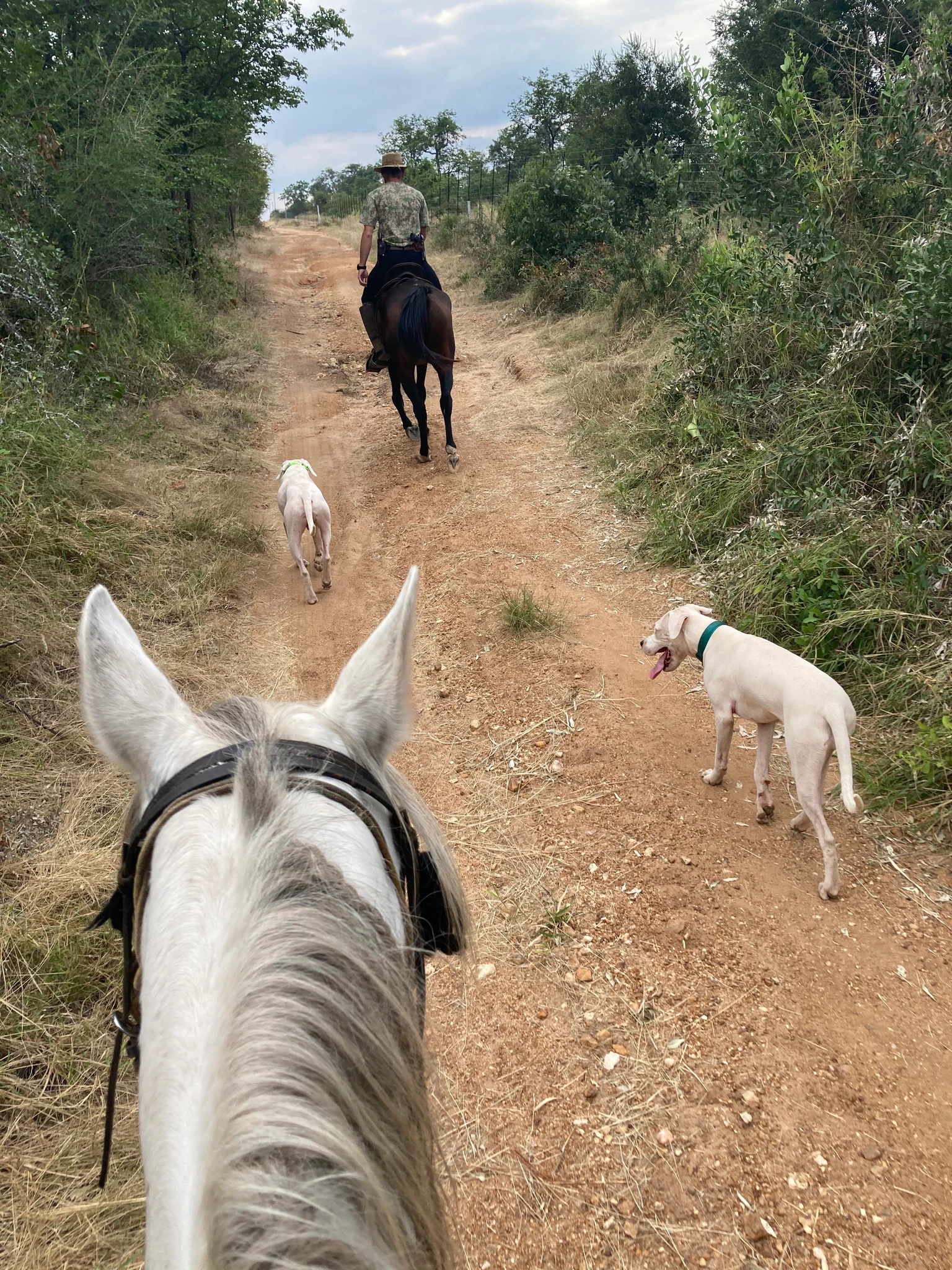
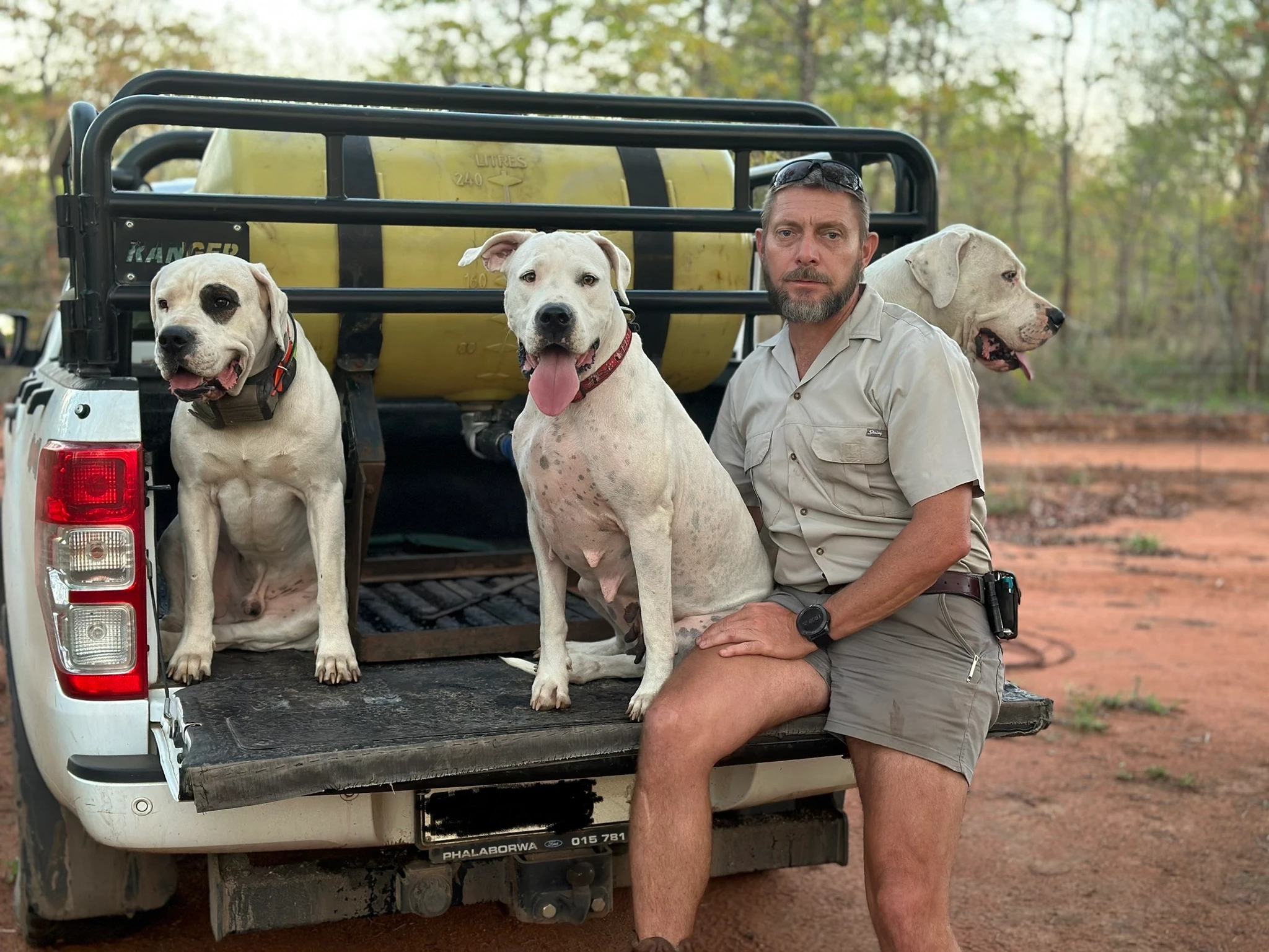
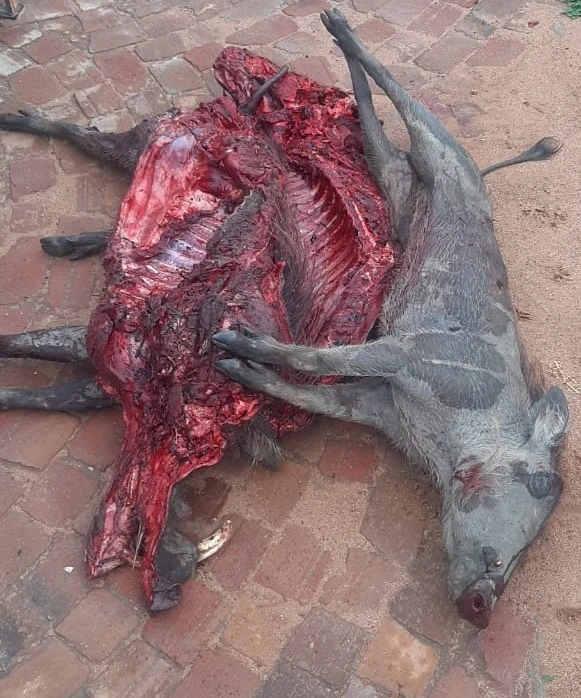
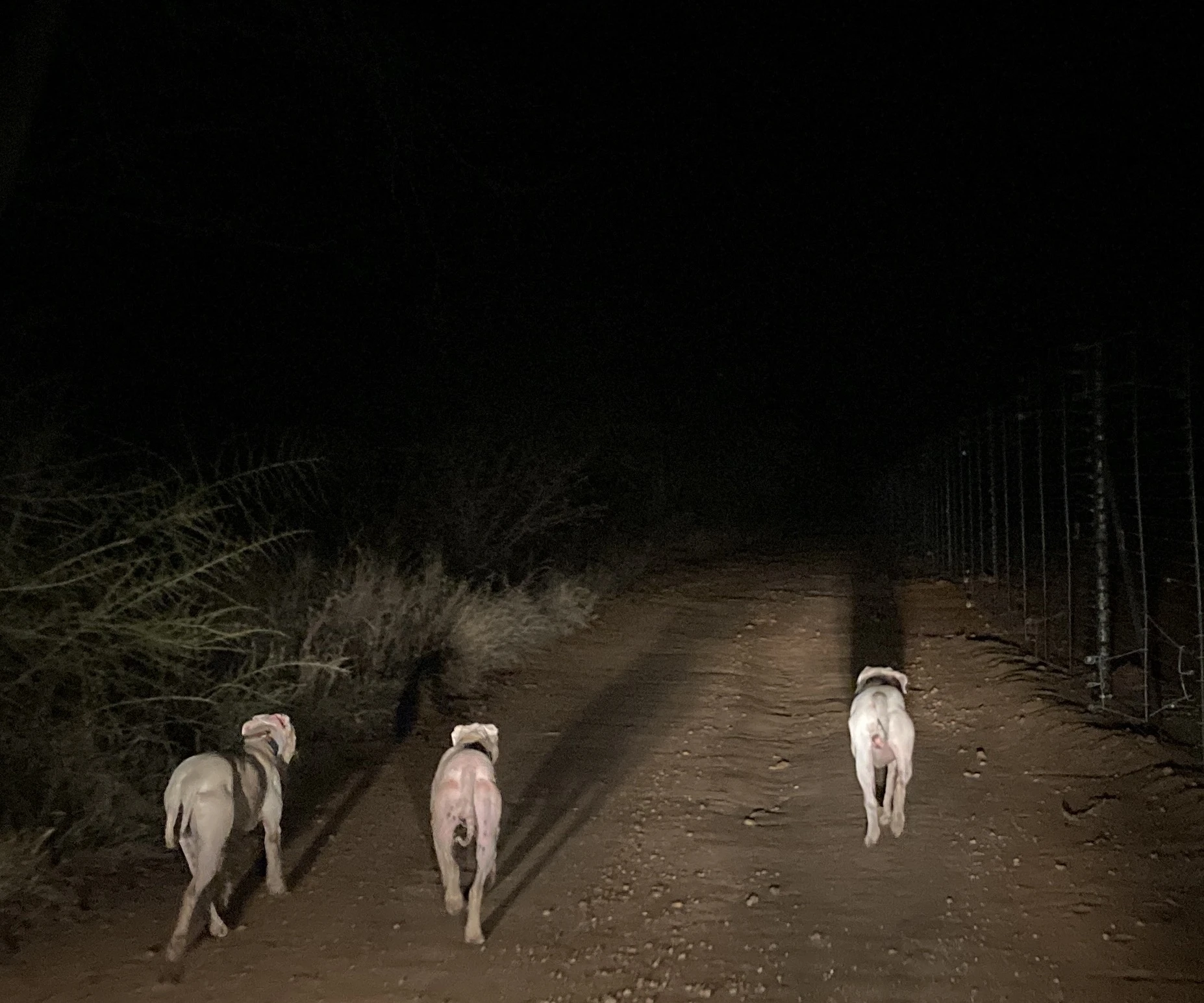
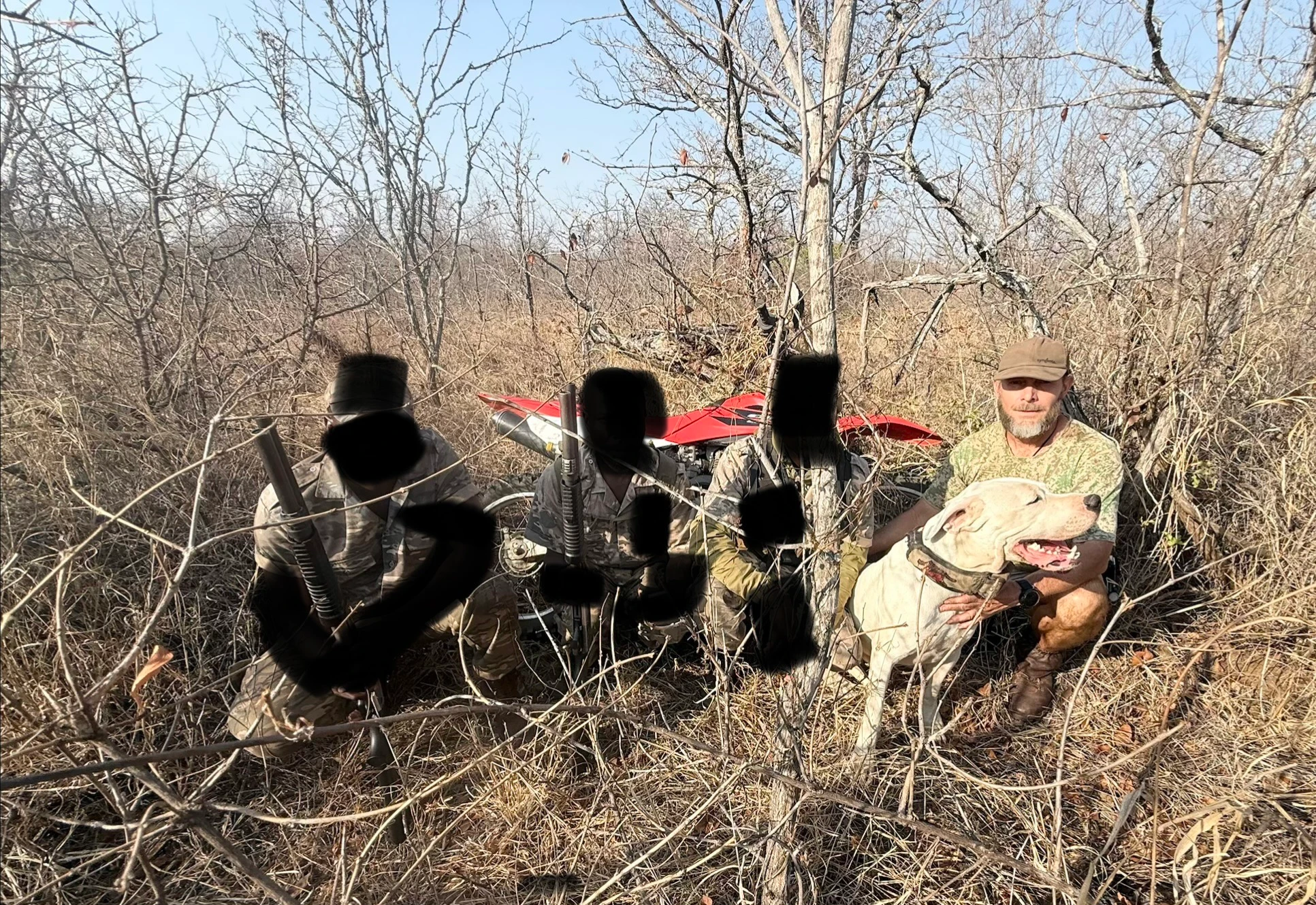
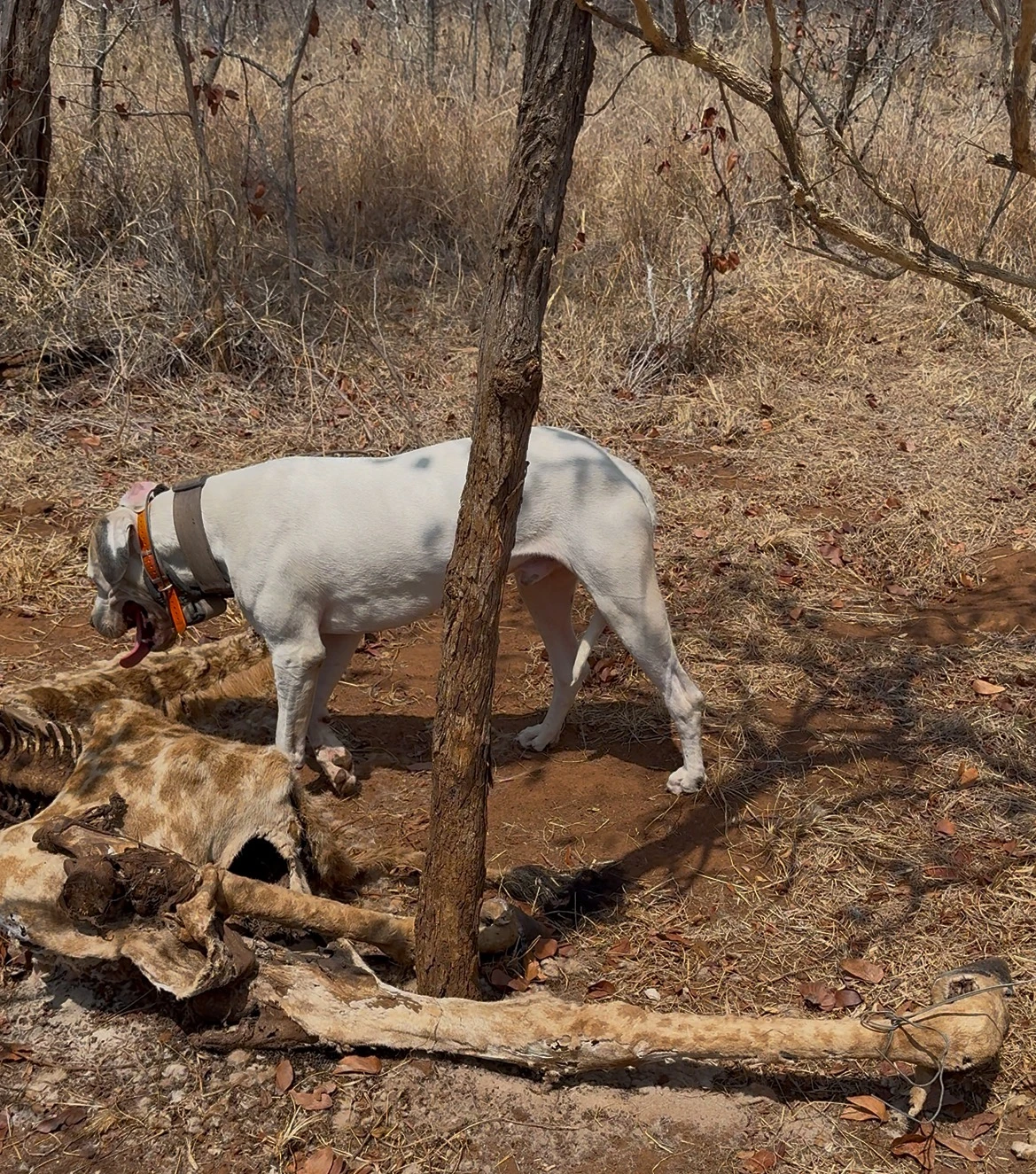
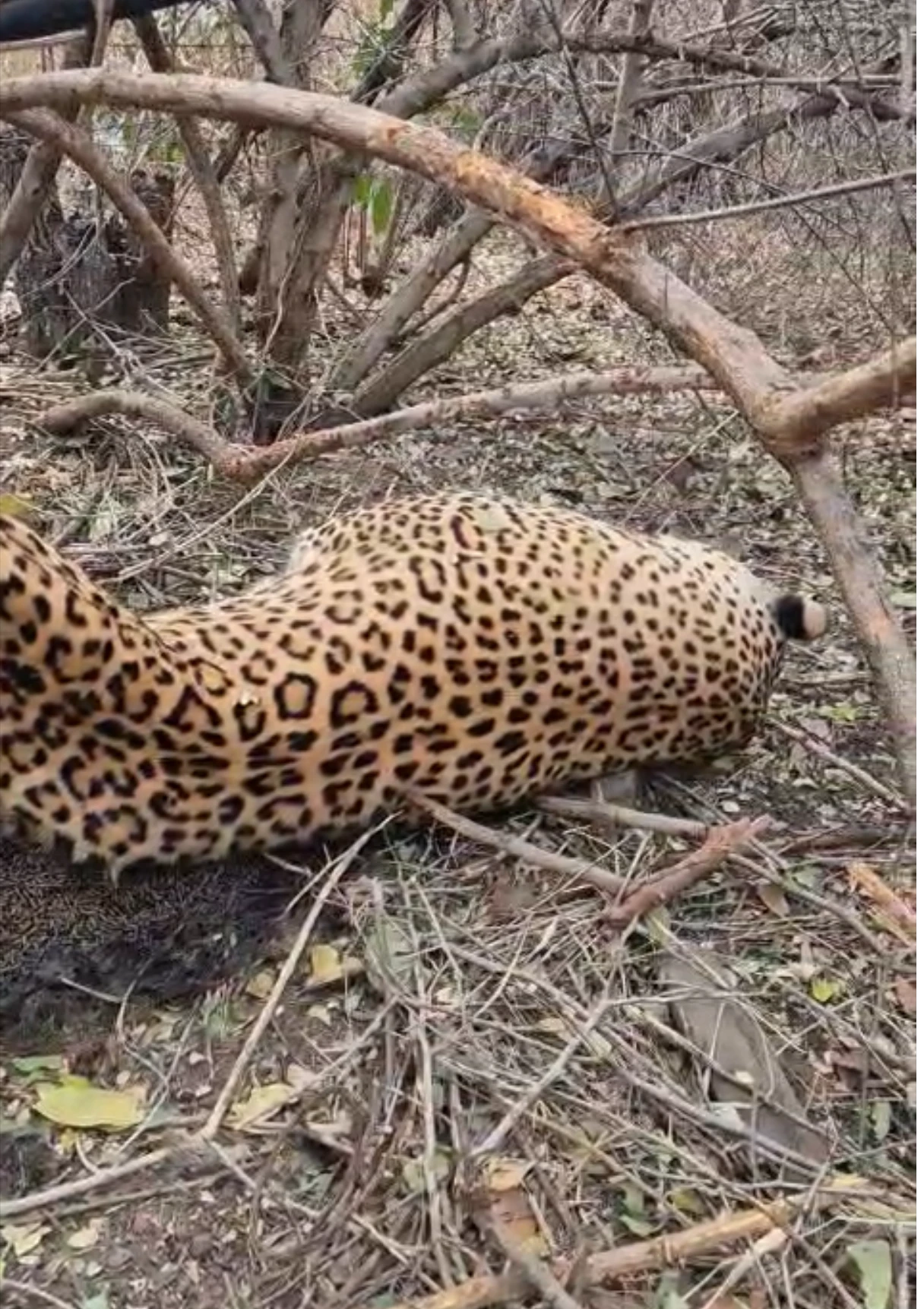
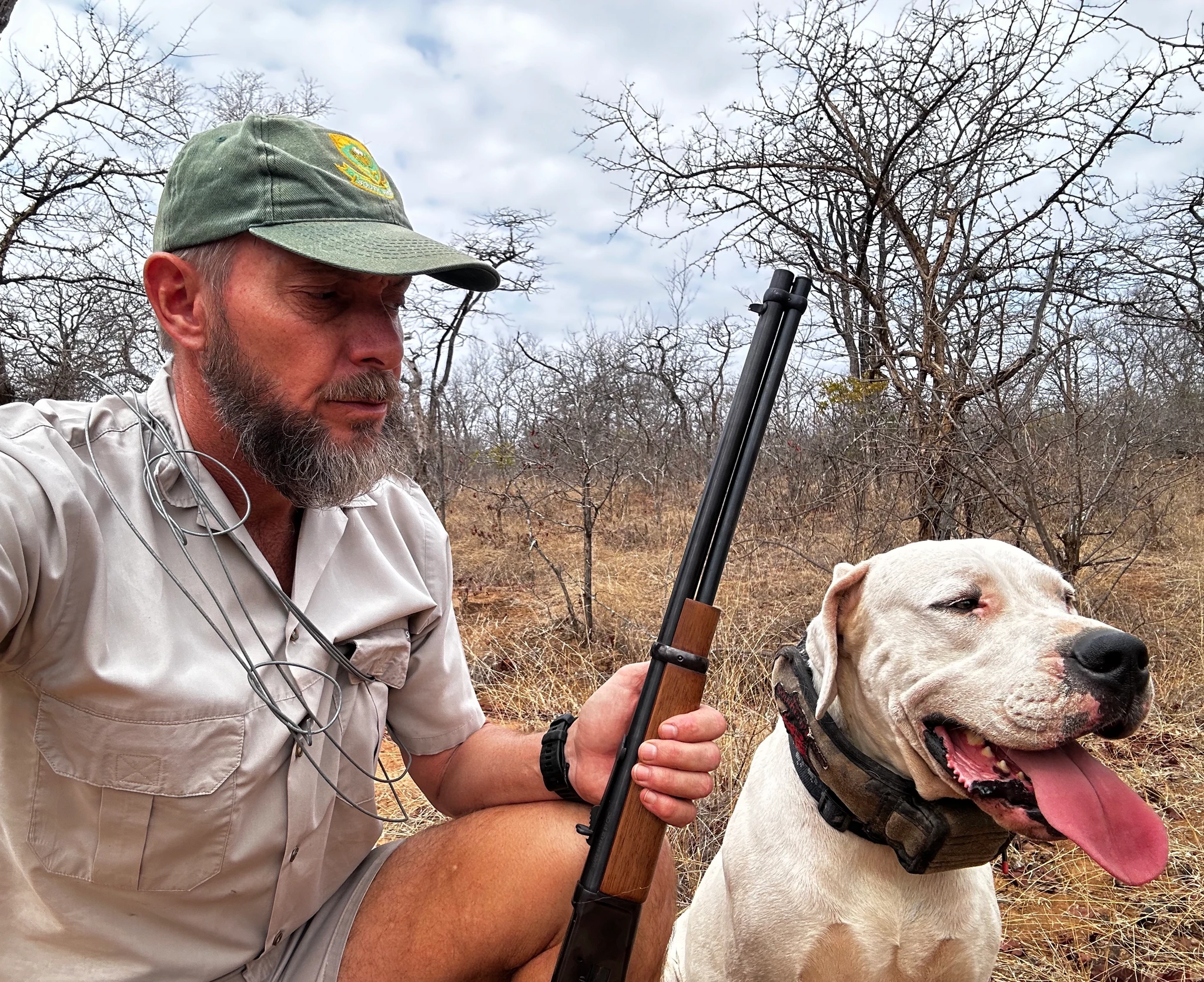
Our own Dogo are all working dogos. They hunt, track, do anti poaching and assist with follow up at crime scenes and farm attacks.
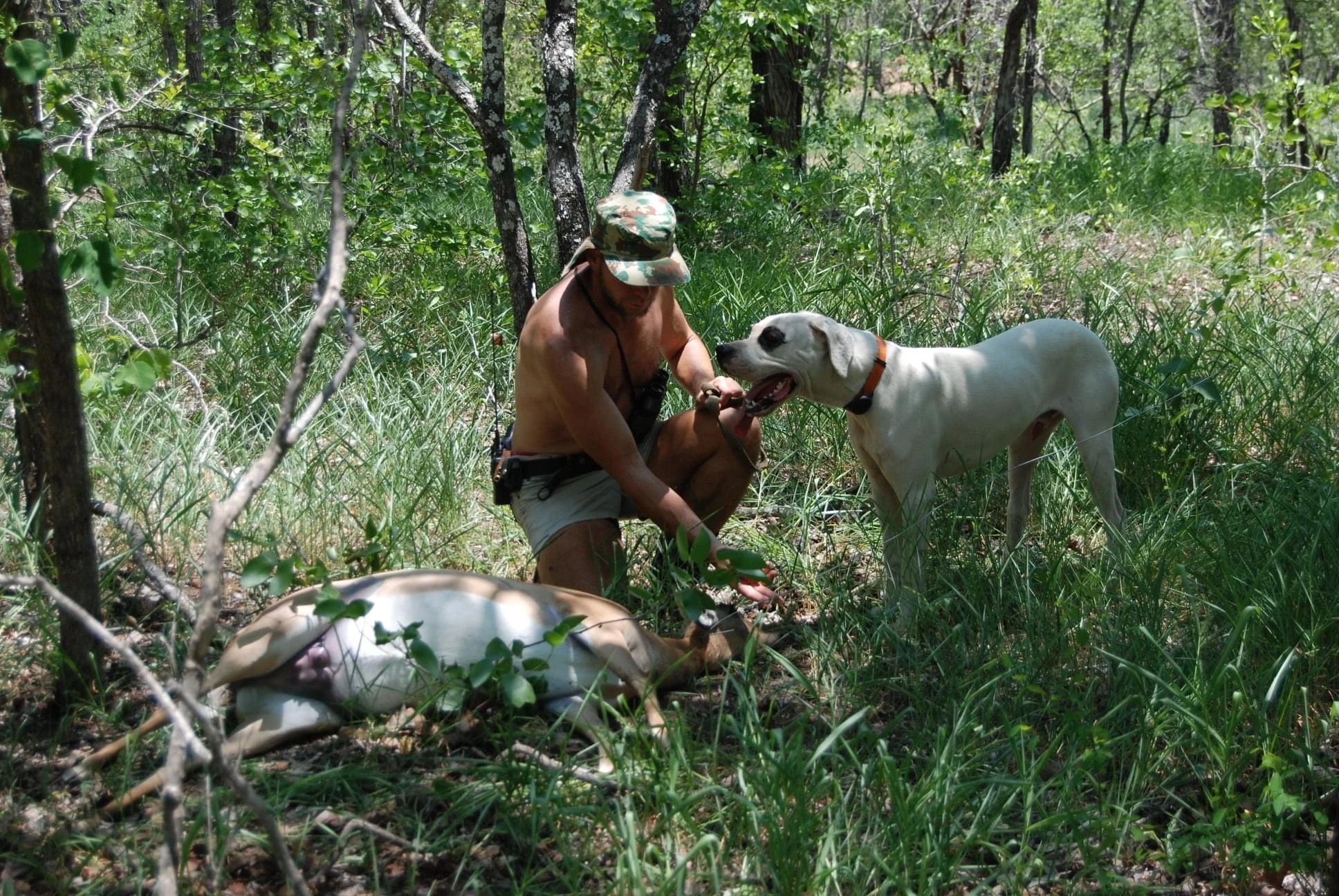
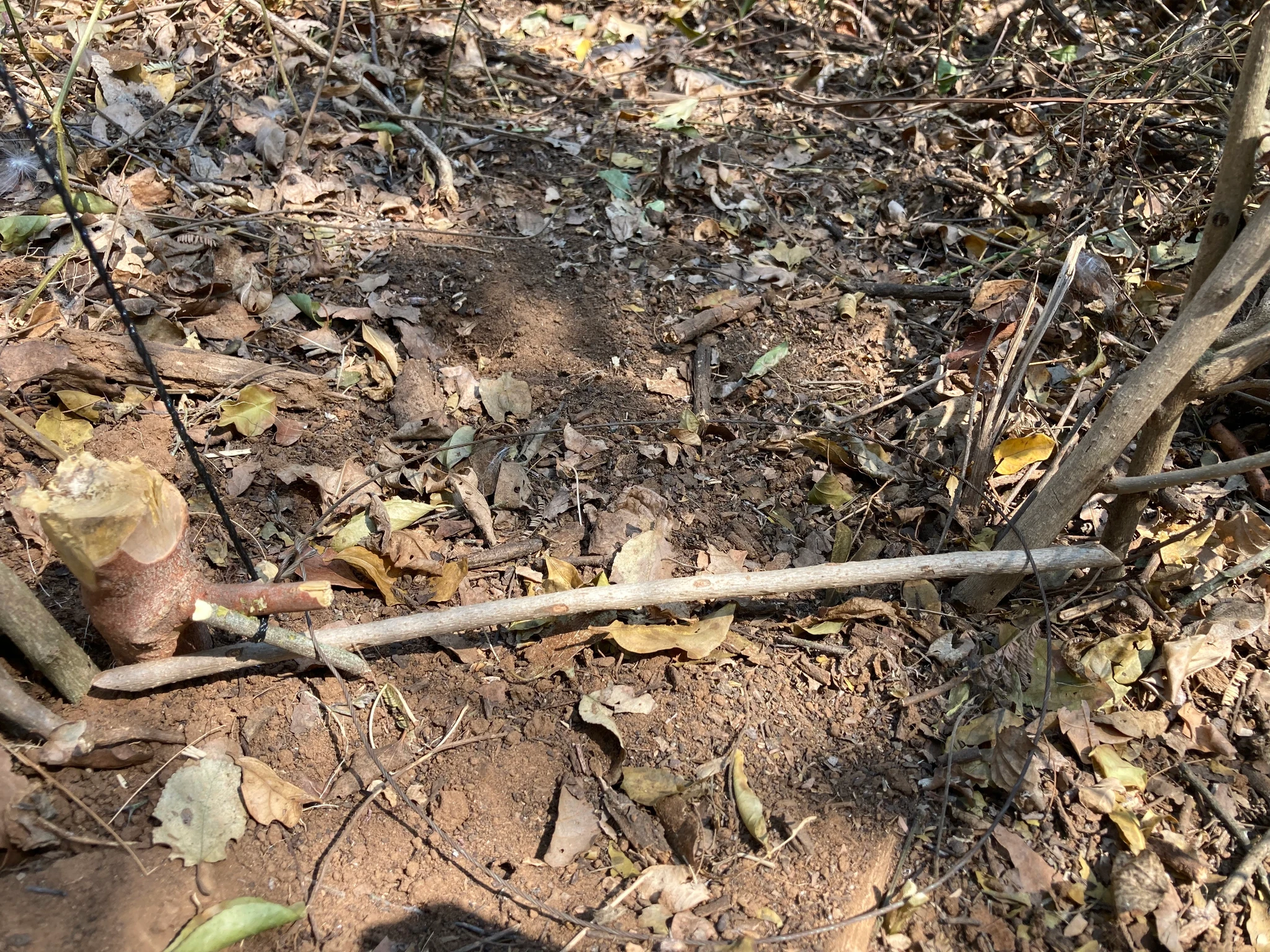
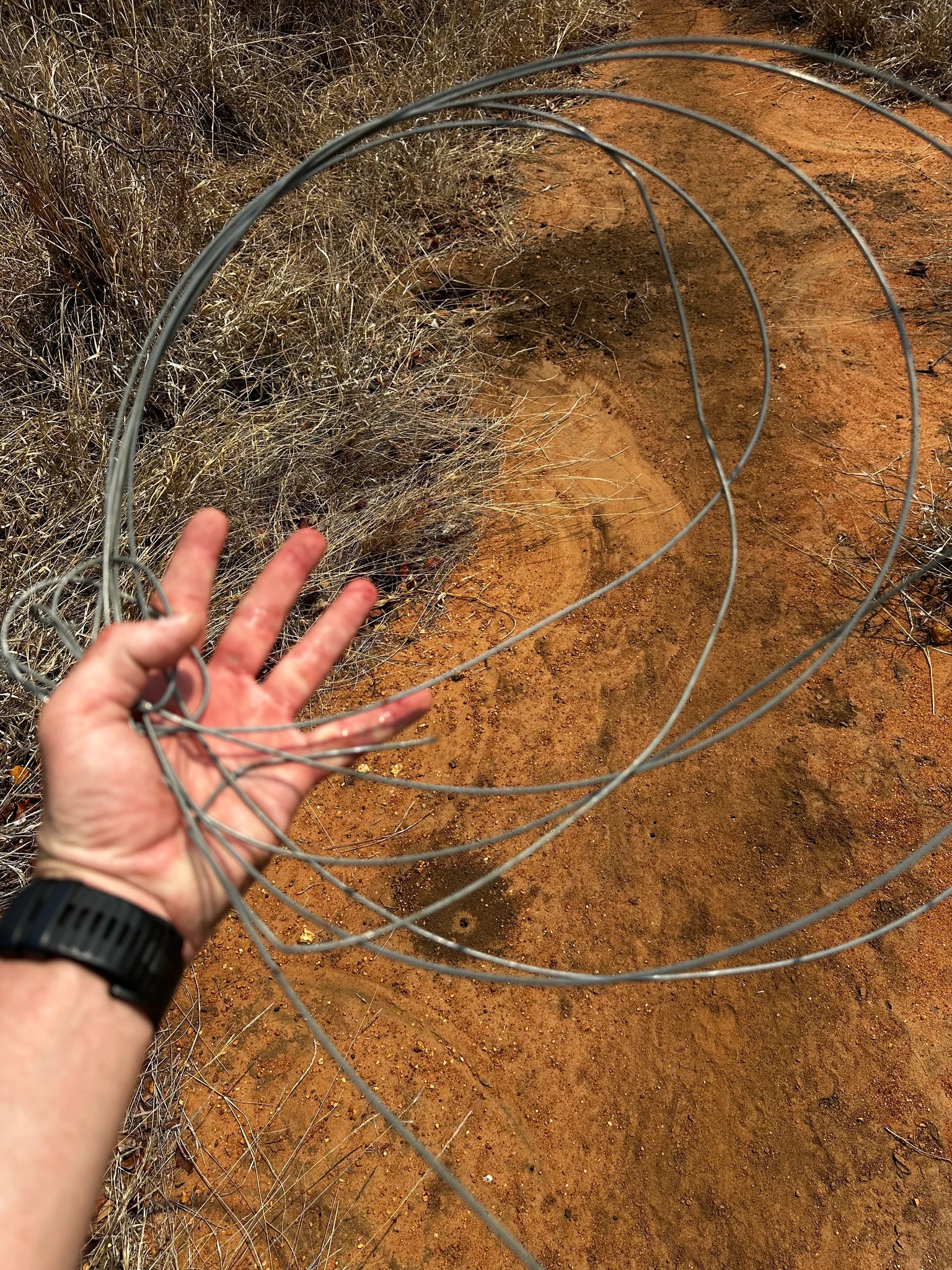
We help track darted game for relocation, do area sweeps for poacher's snares in areas where wildlife is to be rehabilitated and are available for Search & Rescue operations.
Dogo Argentinos have truly proven themselves to be an exceptional breed in Africa.
Dams & sires behind every litter
Breeding working Dogos means working the Dogos you breed. Work drive, temperament and health, start with the parents. Every one of our breeding dogs is at least two years old, working and carefully selected before they're ever bred.
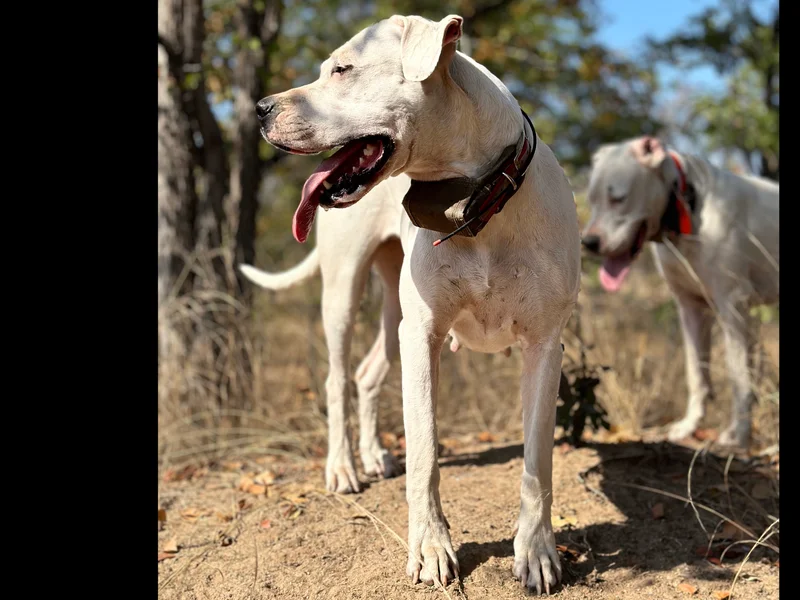
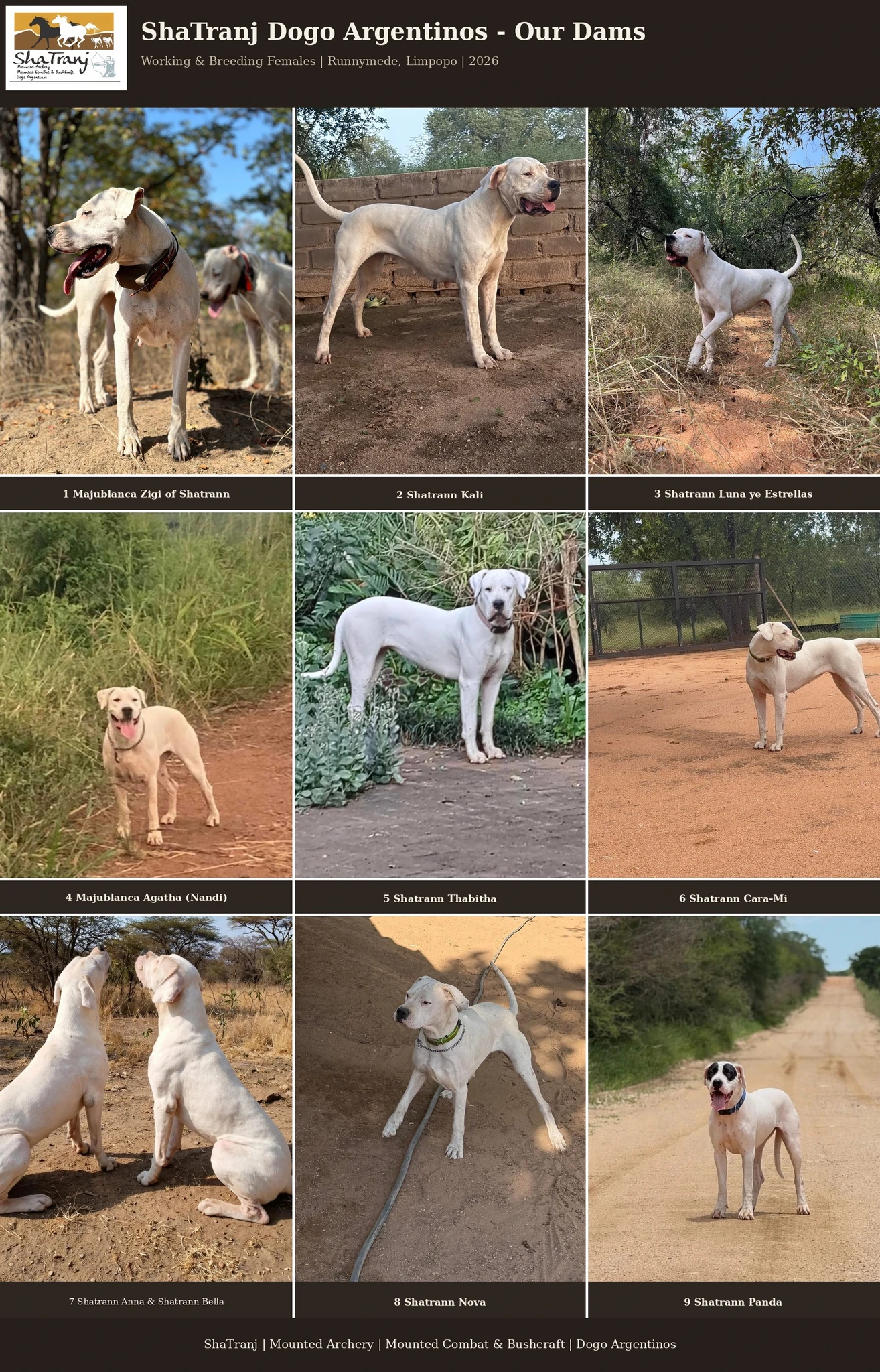
Our dams
The mothers behind every litter — work tested, temperament tested, health-tested and part of the family.
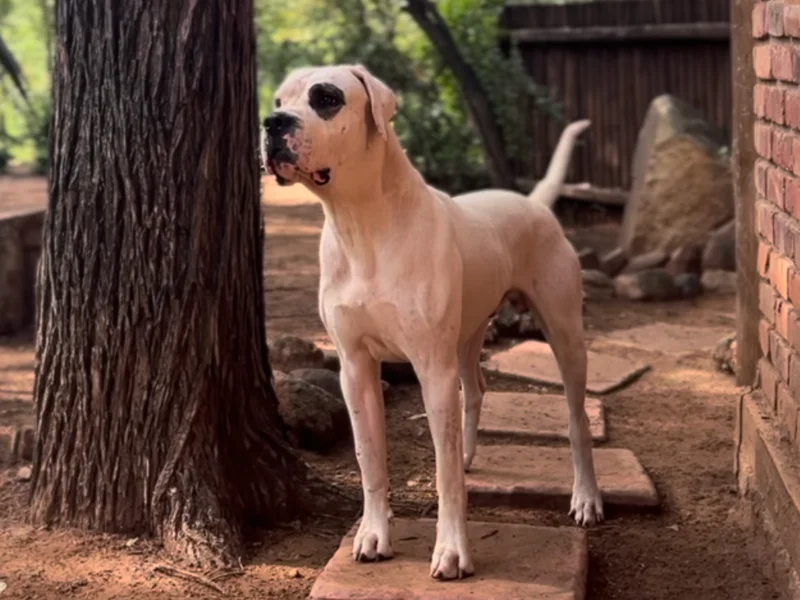
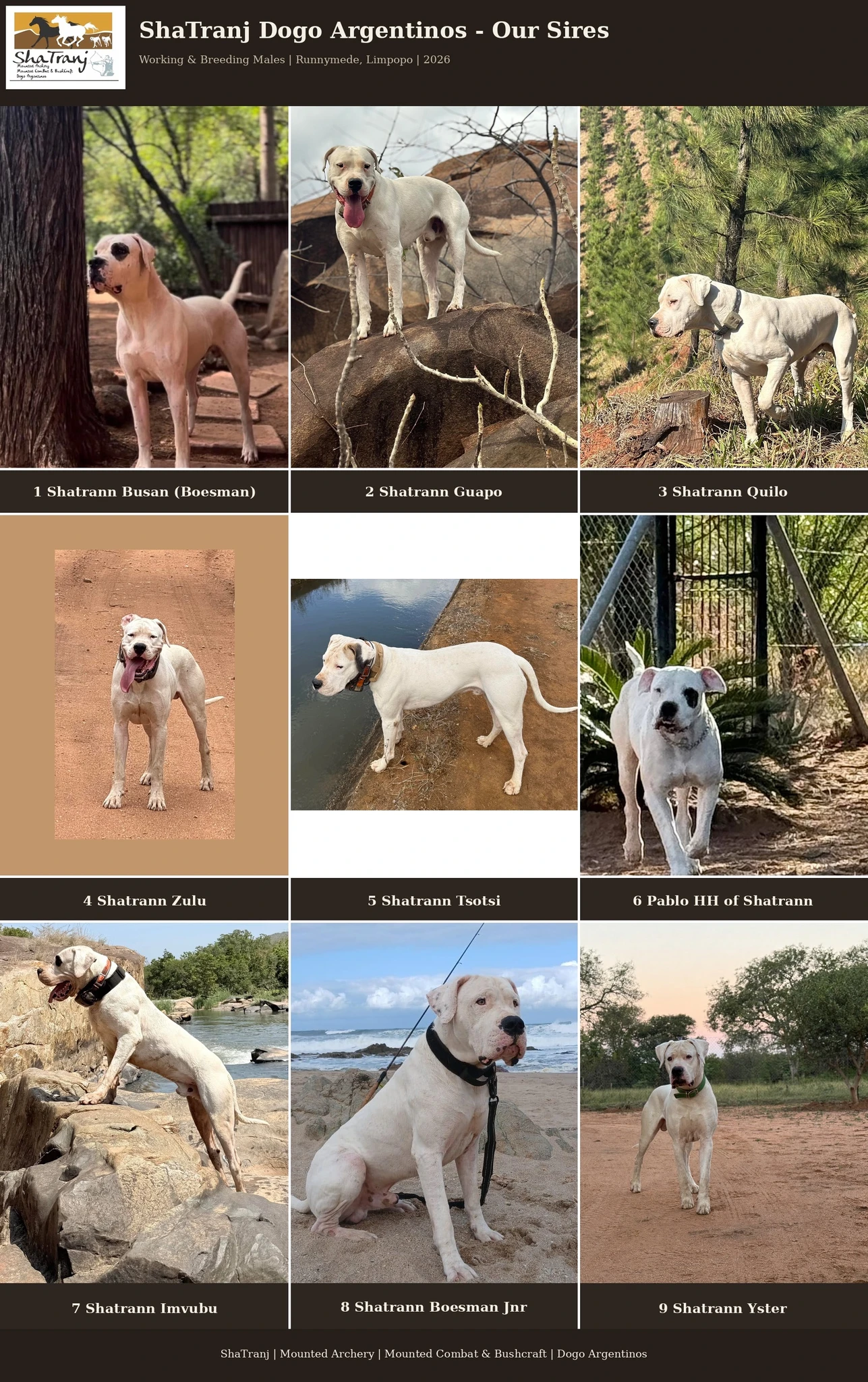
Our sires
Admitting we’re on the stud heavy side…I prefer working with males, whether hunting, tracking or doing anti poaching. Being able to select breeding stock, pick of the litter pups and the opportunity to allow them to mature for two years before final selection, definately allows for “Cream of the Crop” males on our yard. It also allows us to choose the best possible match up when doing a mating.
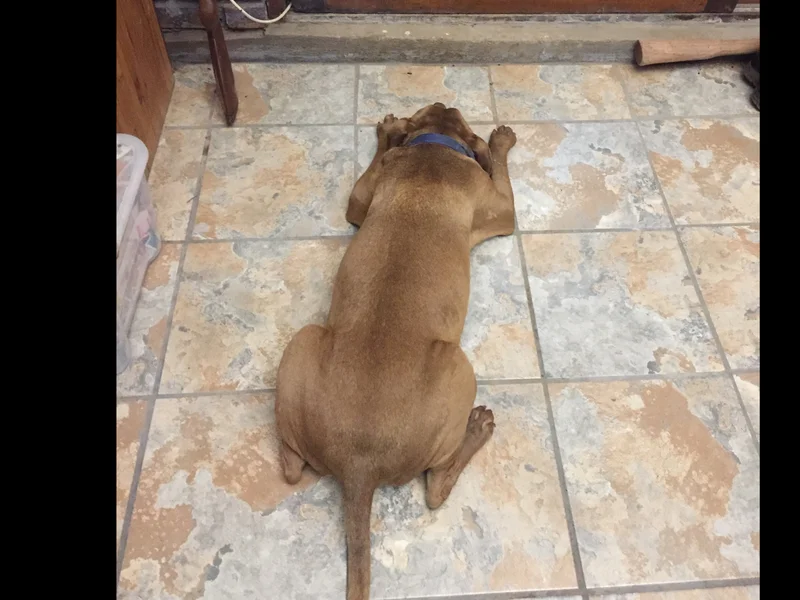
Retired
Once a ShaTranj Dogo (or any other dog or horse) has been selected, or came onto the yard as a deliberate choice, they remain with us, no matter what. They’ve remained true to me…I will do no less…till the end. This counts for every four legged family member on the ShaTranj yard.
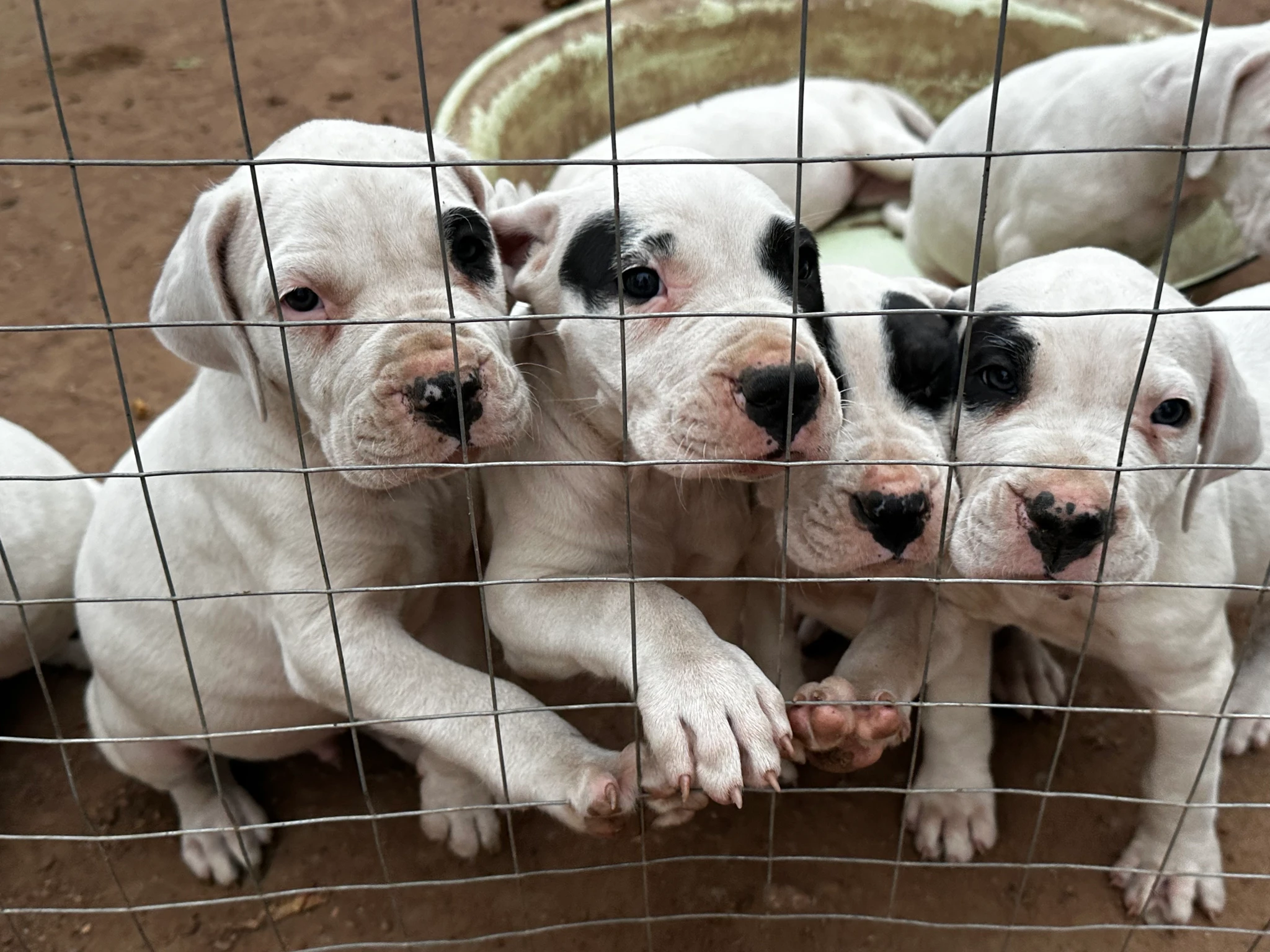
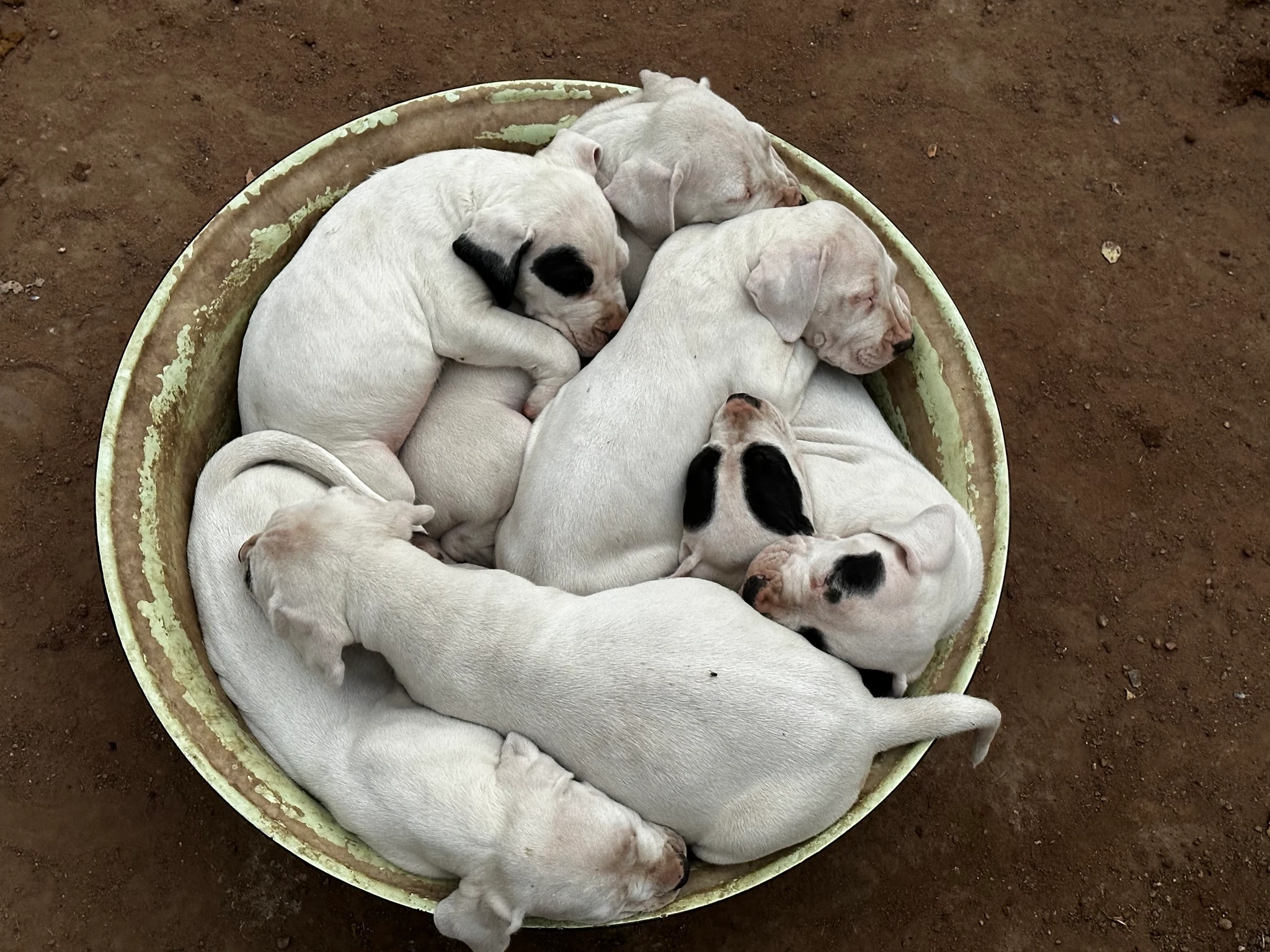
Meet our current pups
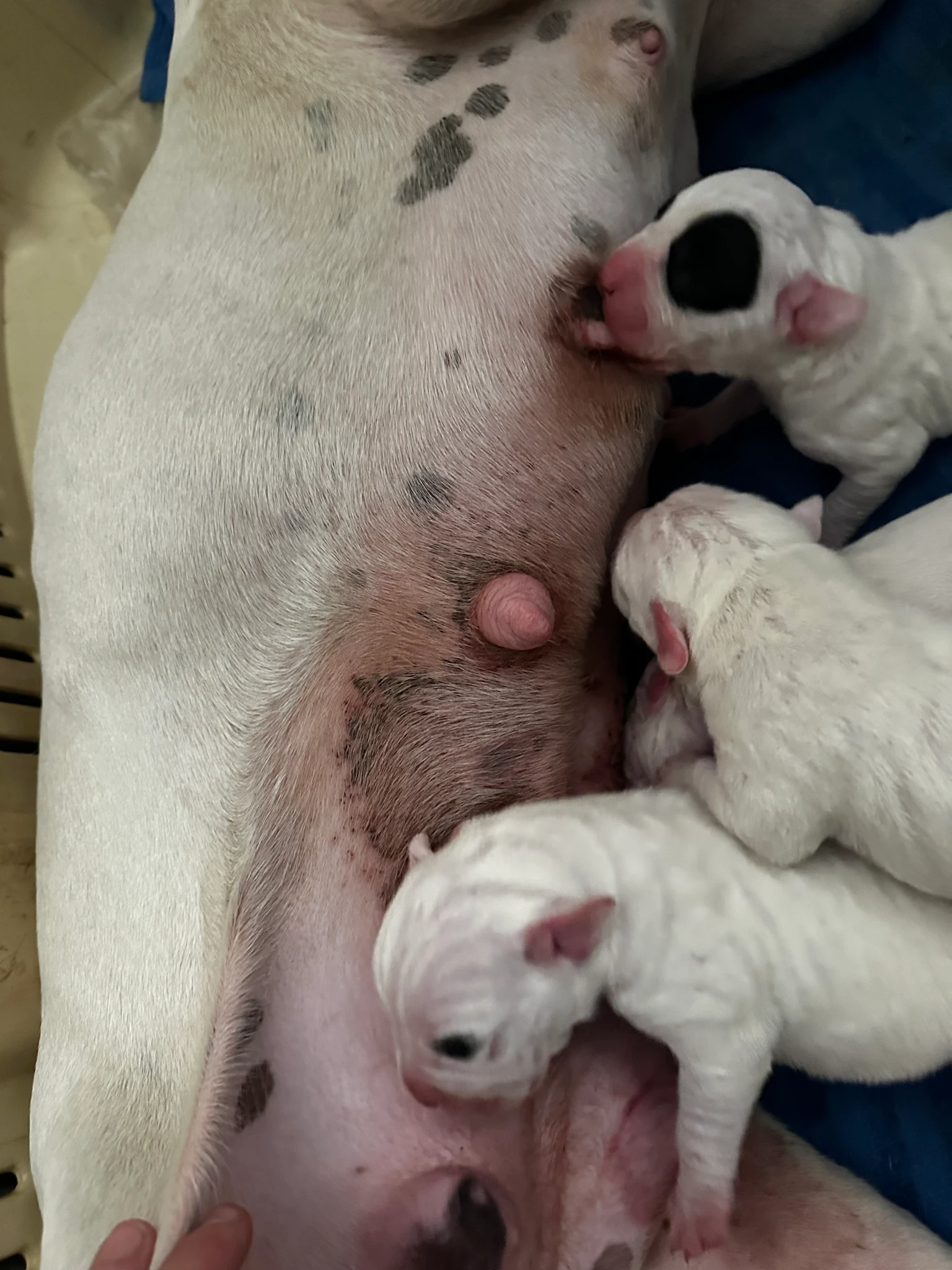
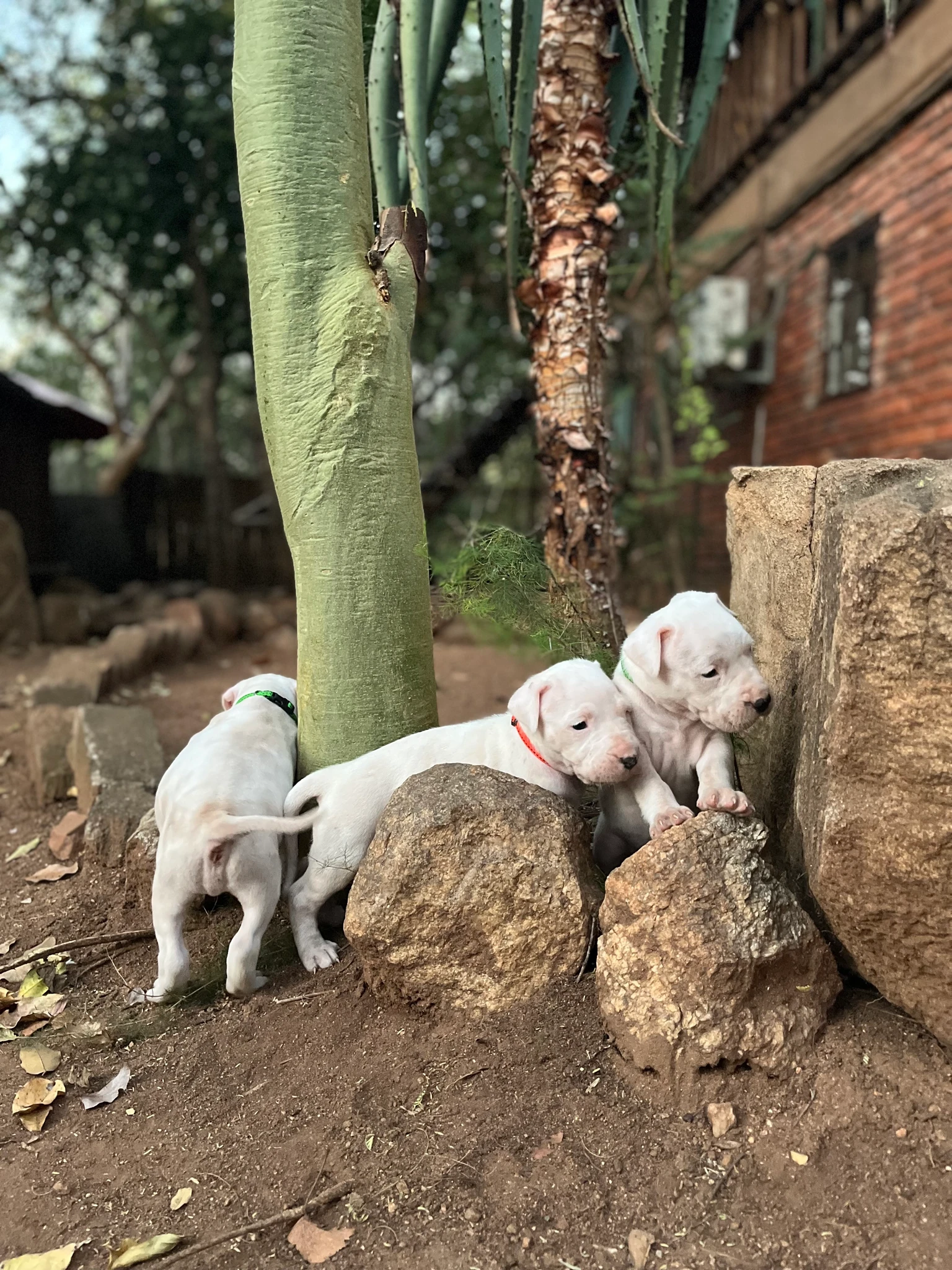
Our spring litter is here! Reservations are accepted in the order applications are approved. Reach out to be added to the waitlist for upcoming litters.
Getting a ShaTranj Dogo
Contact
Establish contact via the webpage application, Facebook, WhatsApp, Instagram, LinkedIn or Messenger
Apply
Completely fill in the Application/Adoption form provided after contact
Only Upon Succesfull application
You will be placed on the waiting list. A deposit holds your spot on the list.
Choose
At this stage you will be updated with all planned and successfull matings, litters born and detail on pups. You may indicate preference, whether “Pick of the Litter”, colour temperament or any other details you are looking for. Video calls can be scheduled to meet pups for those who cannot do so in person to determine which pup suits your family best. Final decision remains with ShaTranj to make as suitable and informed choice, based on experience and puppy exposure, as to whether a specific pup will fit in your home. Ps - therefore, the more honest information you provide, the better we can help you.
Go Home
Your pup will be ready for his/her new adventure by 12 weeks old. Pups can be picked up at ShaTranj or a home drop off can be arranged within a 300km radius from our property. Professional and trusted transport services exist to deliver a pup anywhere in South Africa or anywhere else in the world (as per personal arrangement).
Pups made available are all high quality. Price differences are based on administrative challenges…not quality.
We stand behind our Dogos for life. Here's exactly what you can expect with your ShaTranj pup:
Health Guarantee
Tested for any genetic issues, whether visible or recessively carried in the genes. (Including hips, elbows, blindness, deafness etc). BAER tested. Volhard Puppy Aptitude Test (PAT) done. American Temperament Test Society Test (ATTS) done on all our Dogos at 18 months old (Breeding stock or trained young dogs). Any pup with debilitating genetic defects and suffering euthanasia , symptoms being displayed only after placement; will be replaced by ShaTranj, from any litter of the owners choosing, from any female owned solely by ShaTranj.
Vet-Checked & Vaccinated
Age-appropriate vaccinations, deworming, and a full nose-to-tail vet exam before pickup.
Working, health & temperament cleared parents
Both parents are working Dogos, selected over a period of two years or more and are deemed excellent examples of the breed with a high work drive, high intelligence, agility, stamina, stable temperament, excellent health and a stronger natural resistance to harsh African conditions.
Microchipped & Registered
Options exist to choose unregistered (with or without microchip), registered and fully registered with breeding rights. Pups are registered with KUSA, the South African representative body of the FCI. ShaTranj can send your Dogo Argentino anywhere in the world (where they’re legal), pending a successful Application process.
Early Socialization
An essential process…are approached a bit differently at ShaTranj: first of all, pups stays until 12 weeks old, being introduced to the other members of the pack from as early as four weeks (for those allowed by the mother), freely integrating with all the Dogos on the yard and experiencing natural hierarchy from the onset. The principle is enforced by the pack, not by their humans. We are located in the South African Lowveld, on a farm, with lion, leopard, elephant, rhino and all the rest walking the fencelines…our Dogos are exposed to all the natural wildlife (the beauties and the nasties), horses, cattle, sheep, goats and multiple strange dogs over their time on the farm.
Lifetime Support
Any time of the night or day, any type of problem, injury, question or whatever support we can provide, either directly or through networking…the line is always open for anyone in the ShaTranj family. And if you simply don’t know what to do, who to call or how to survive your immediate, or prolonged predicament…call us.
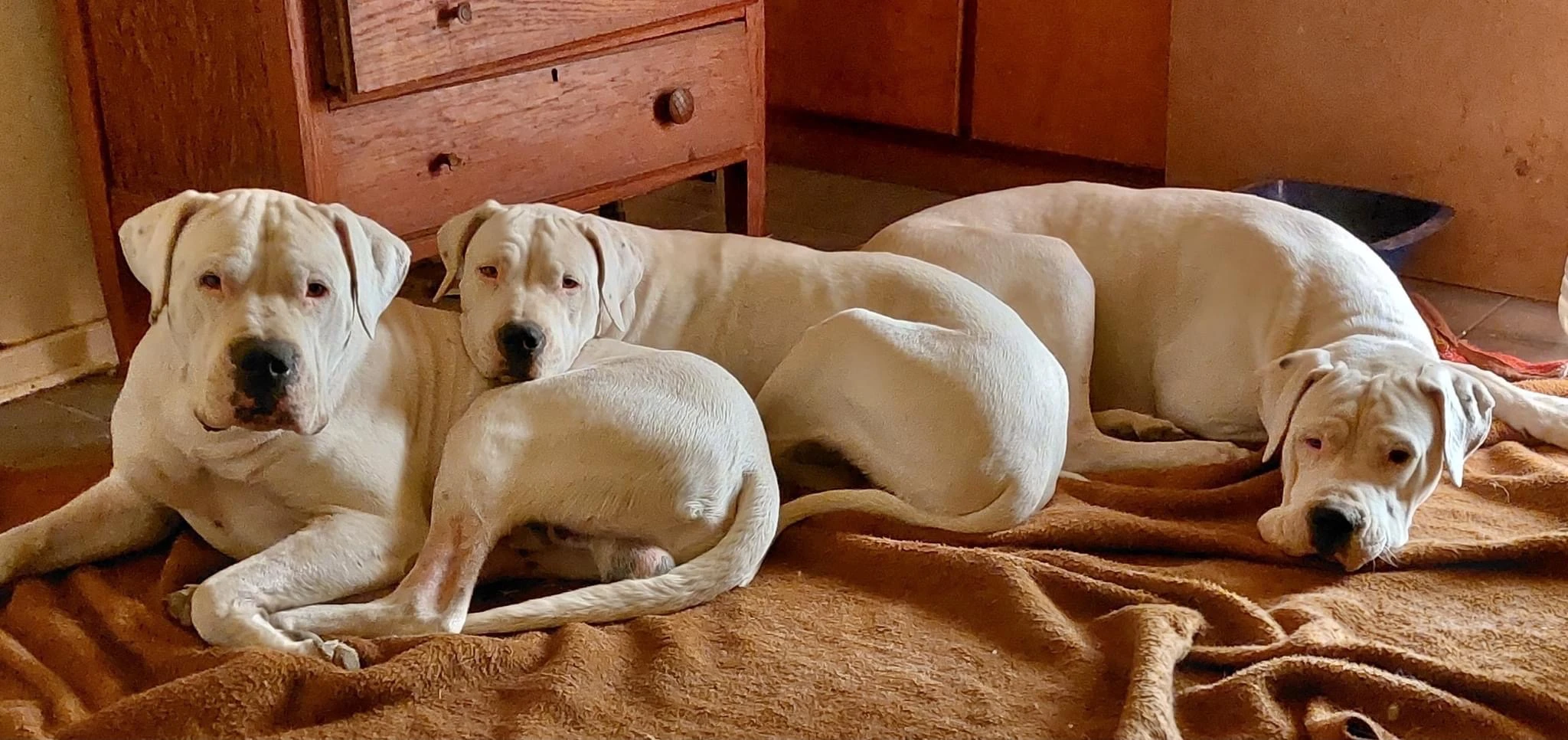
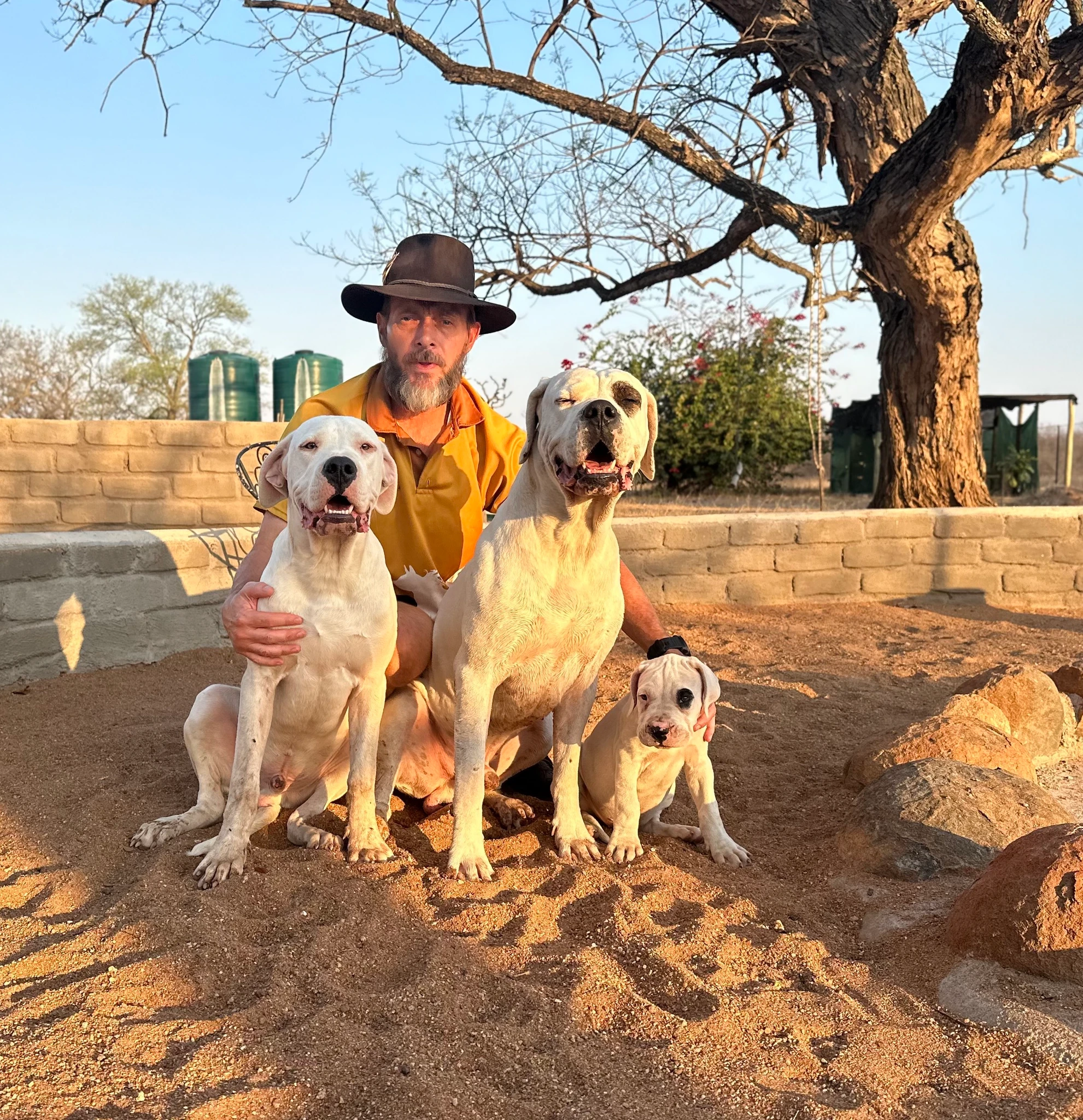
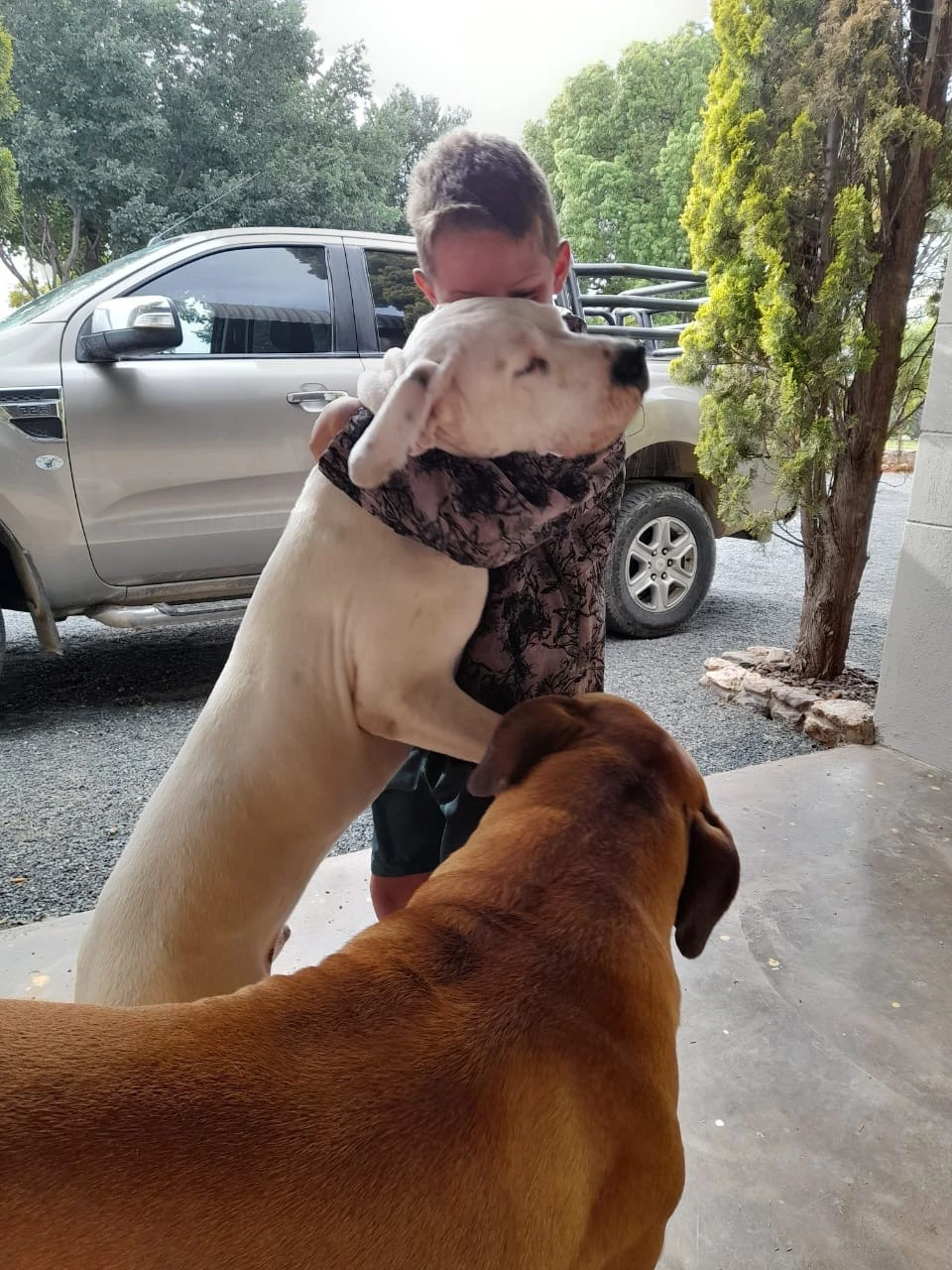
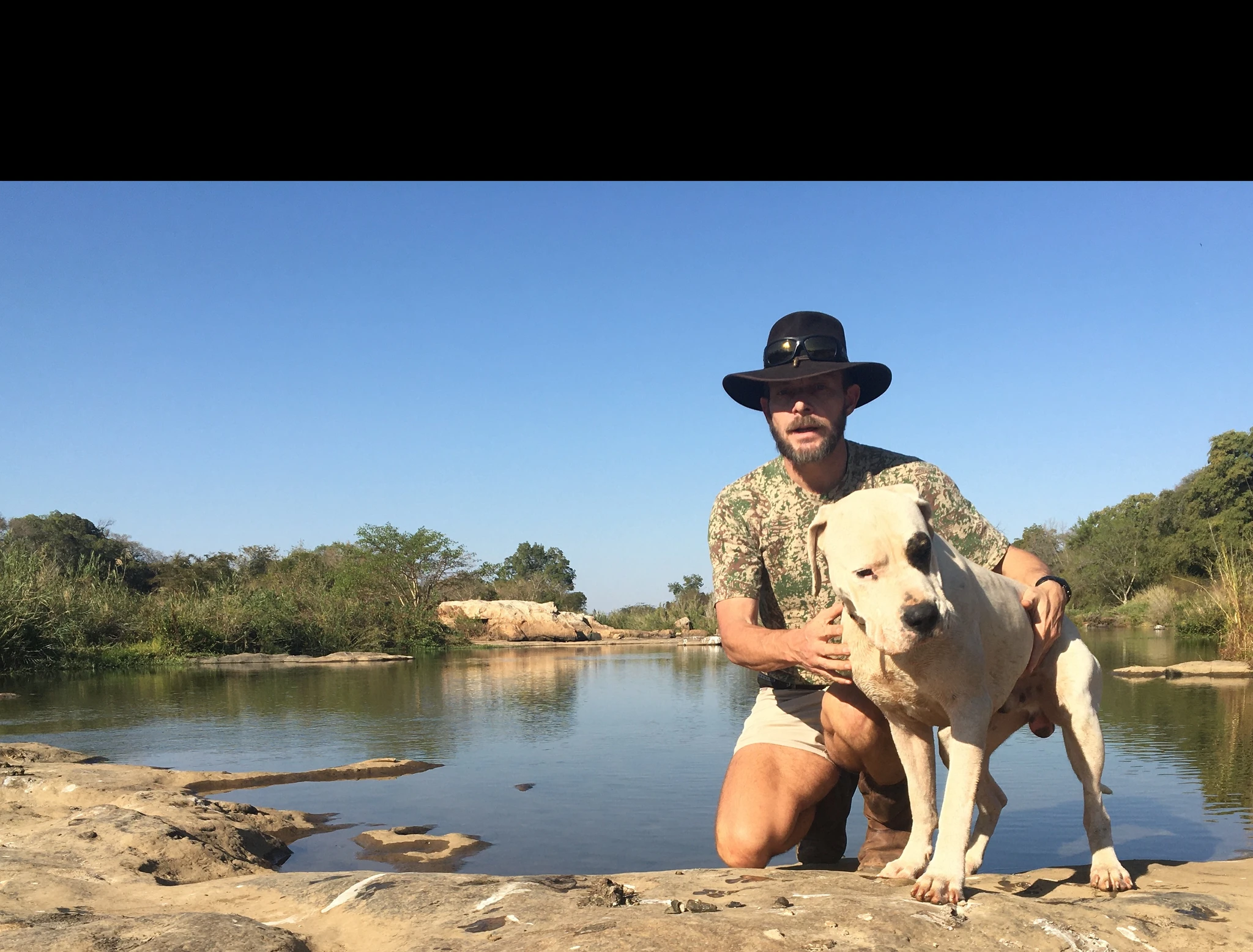
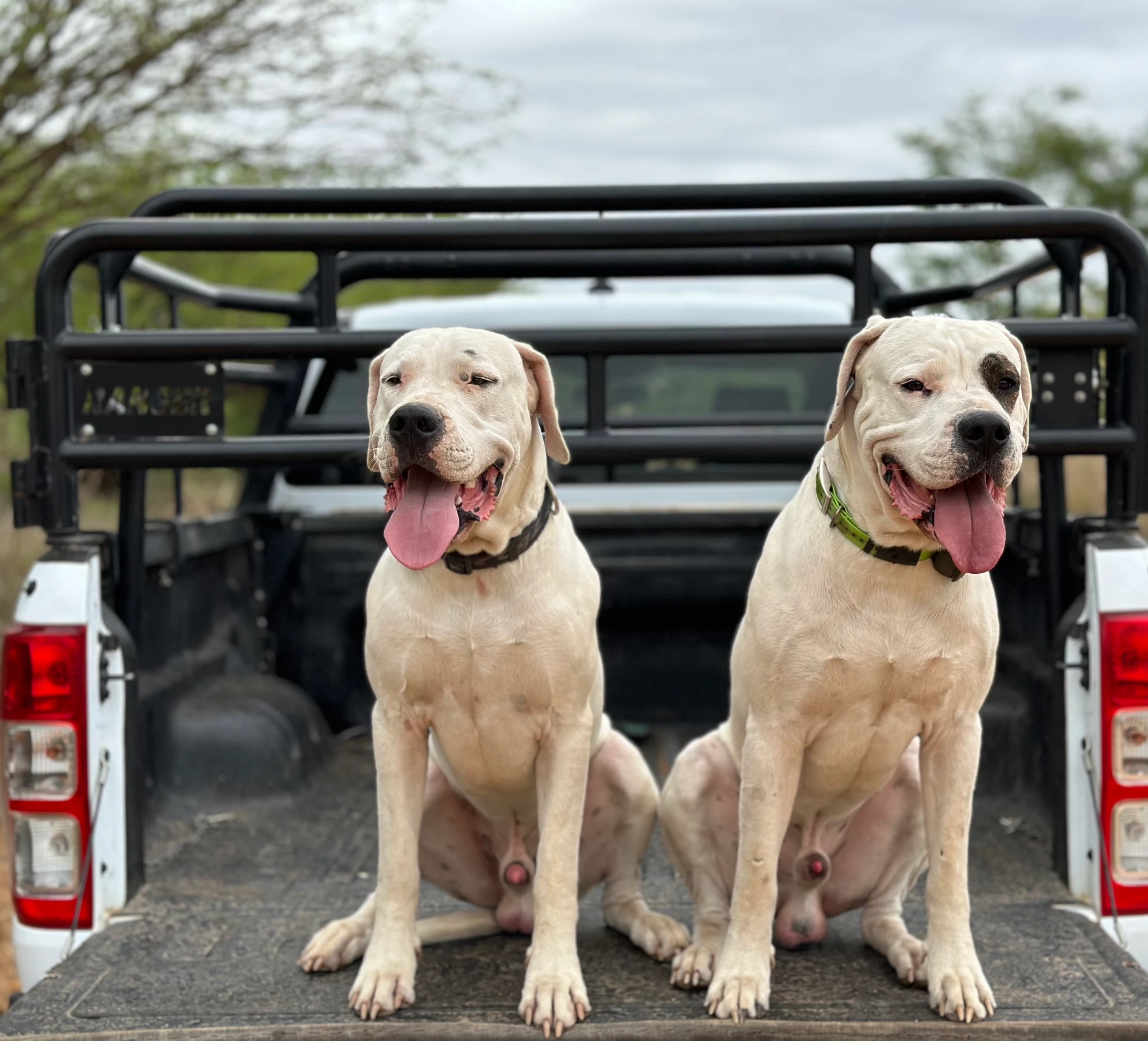
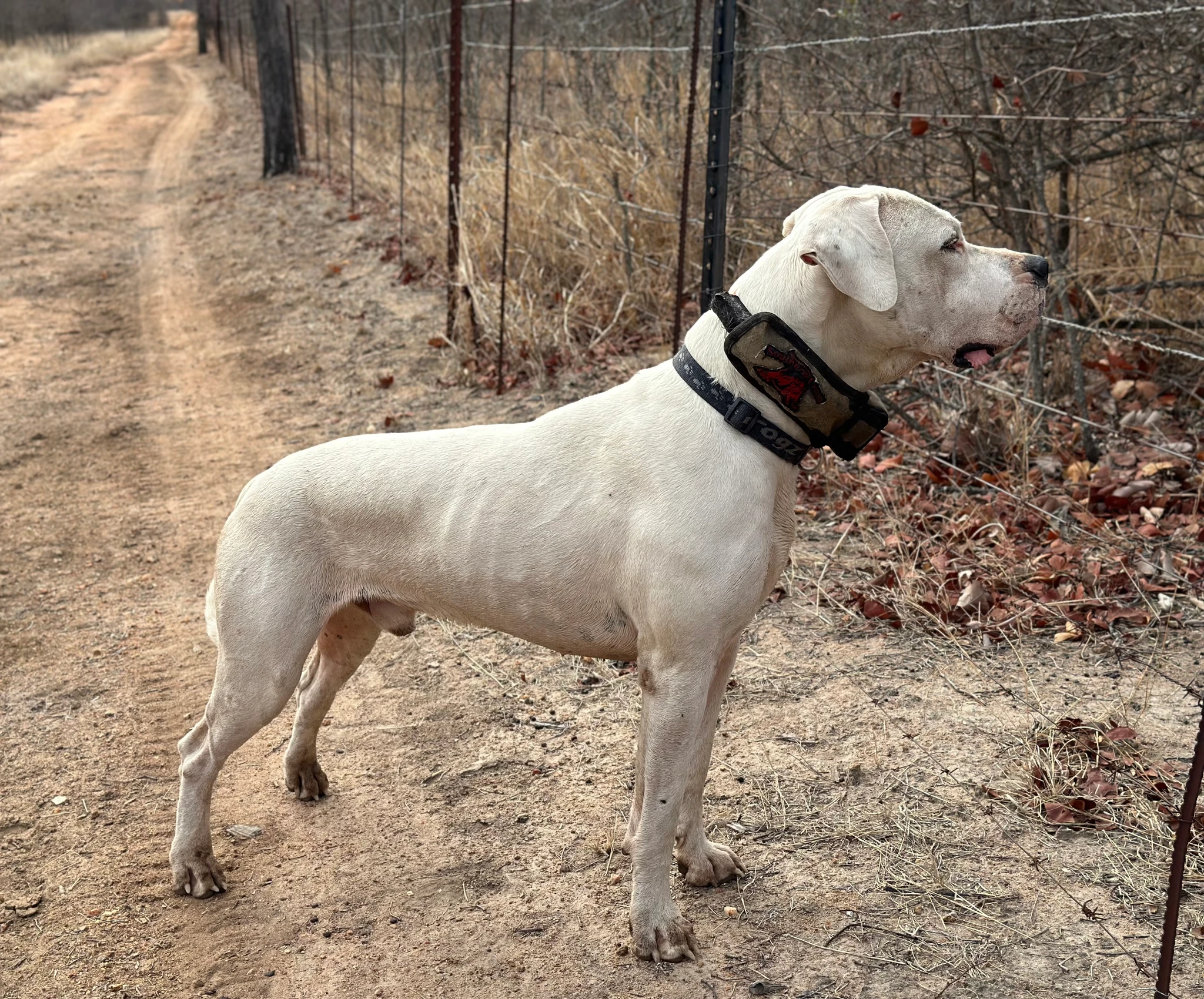
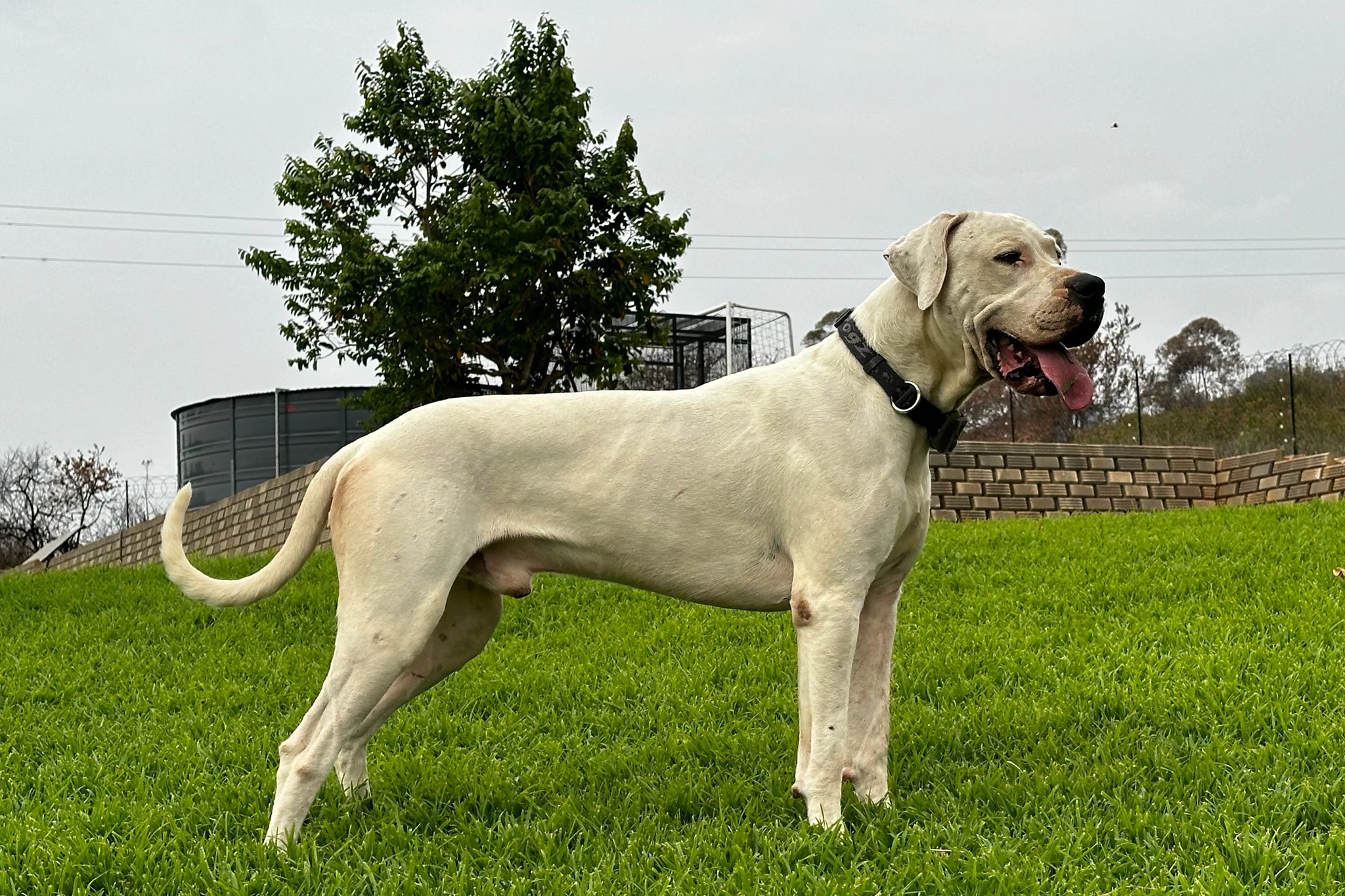
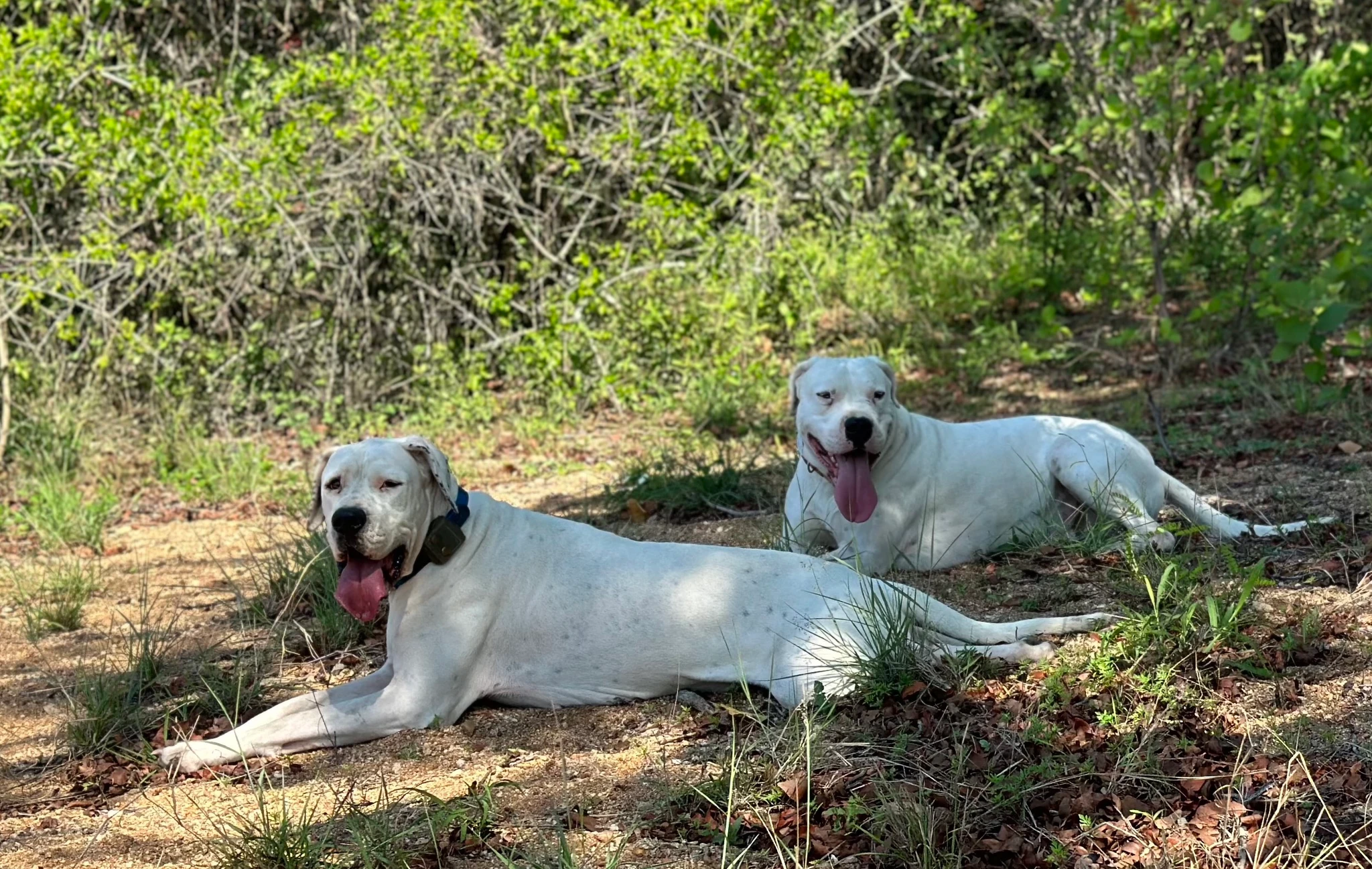
Dogos from the ShaTranj yard…
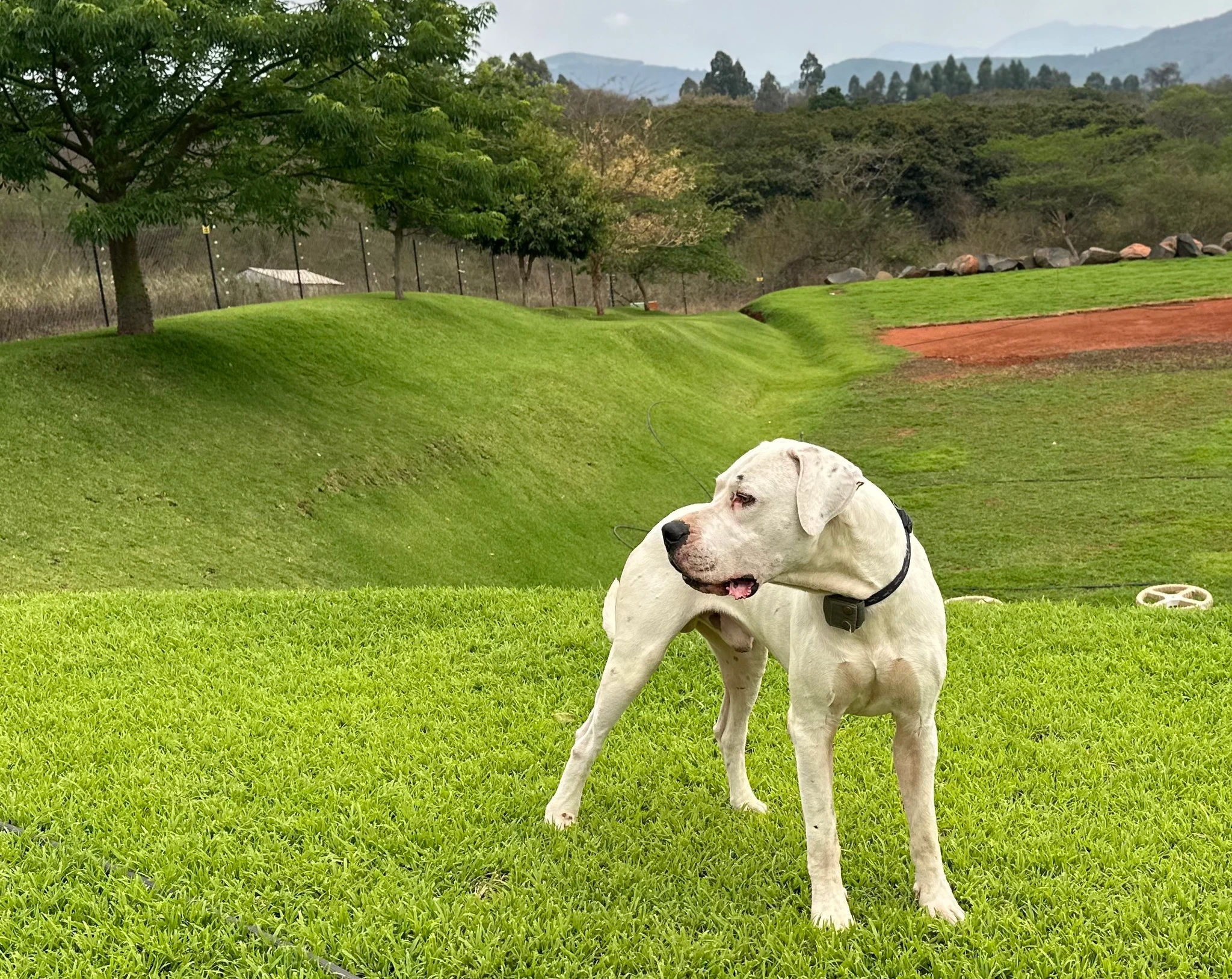
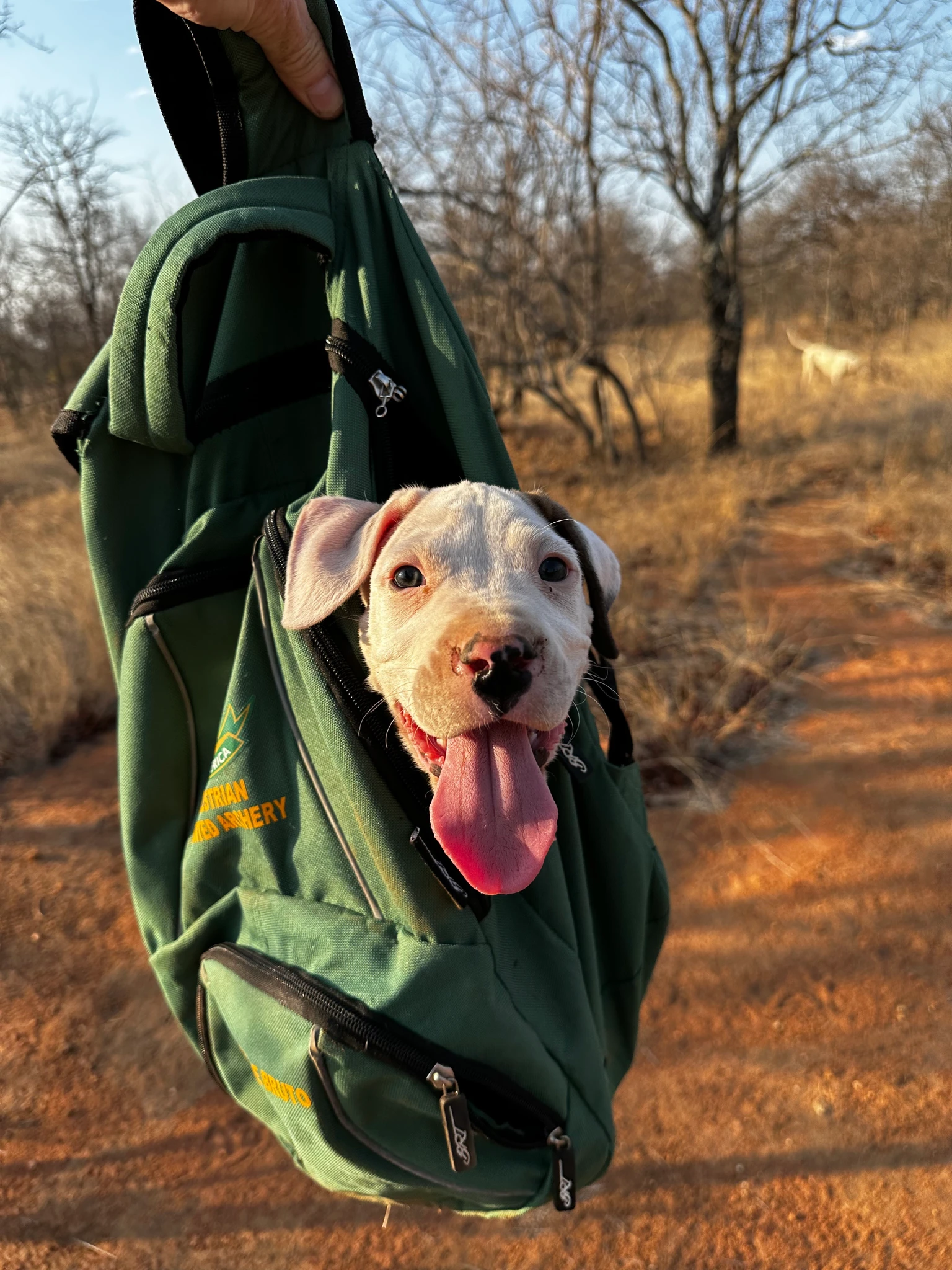
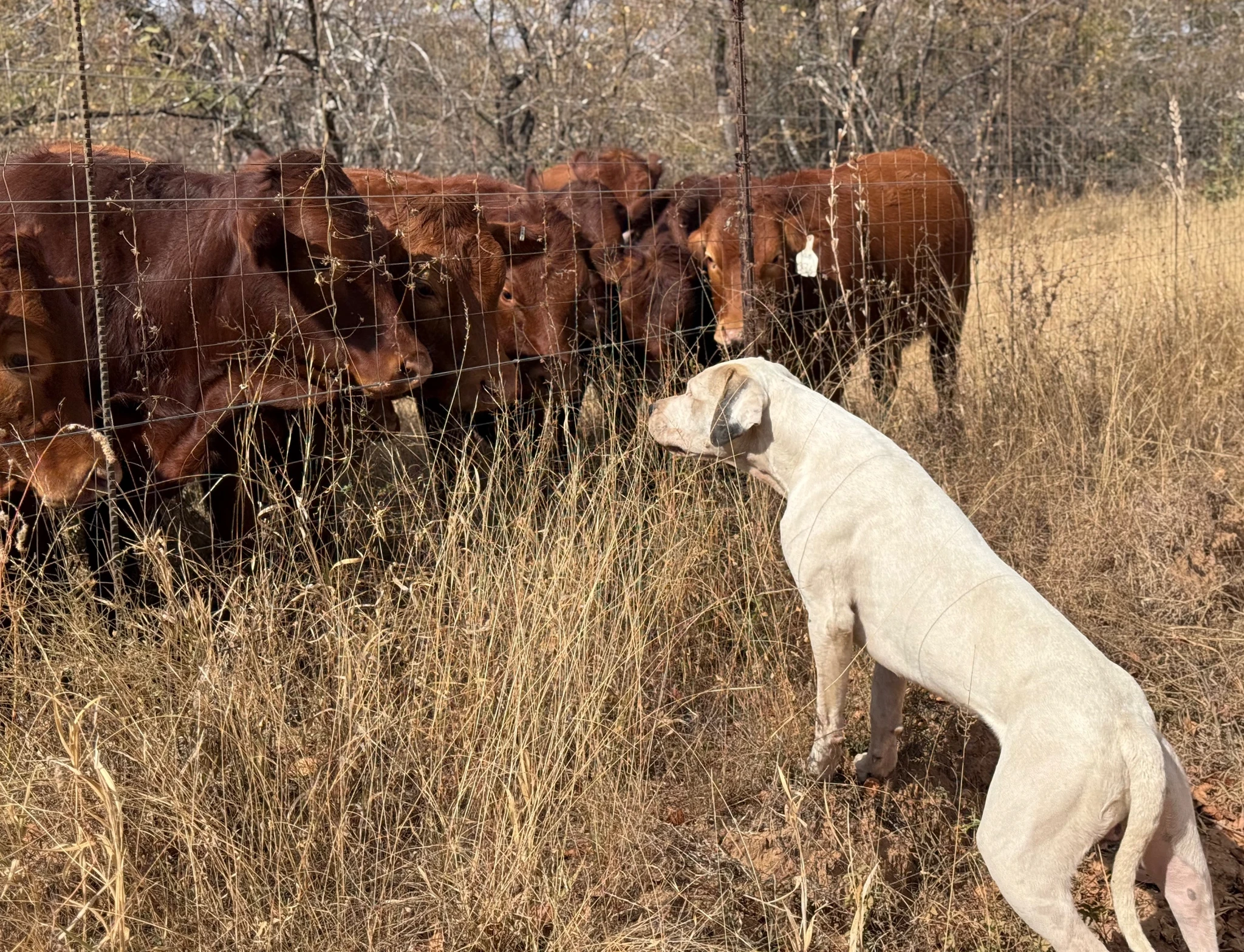
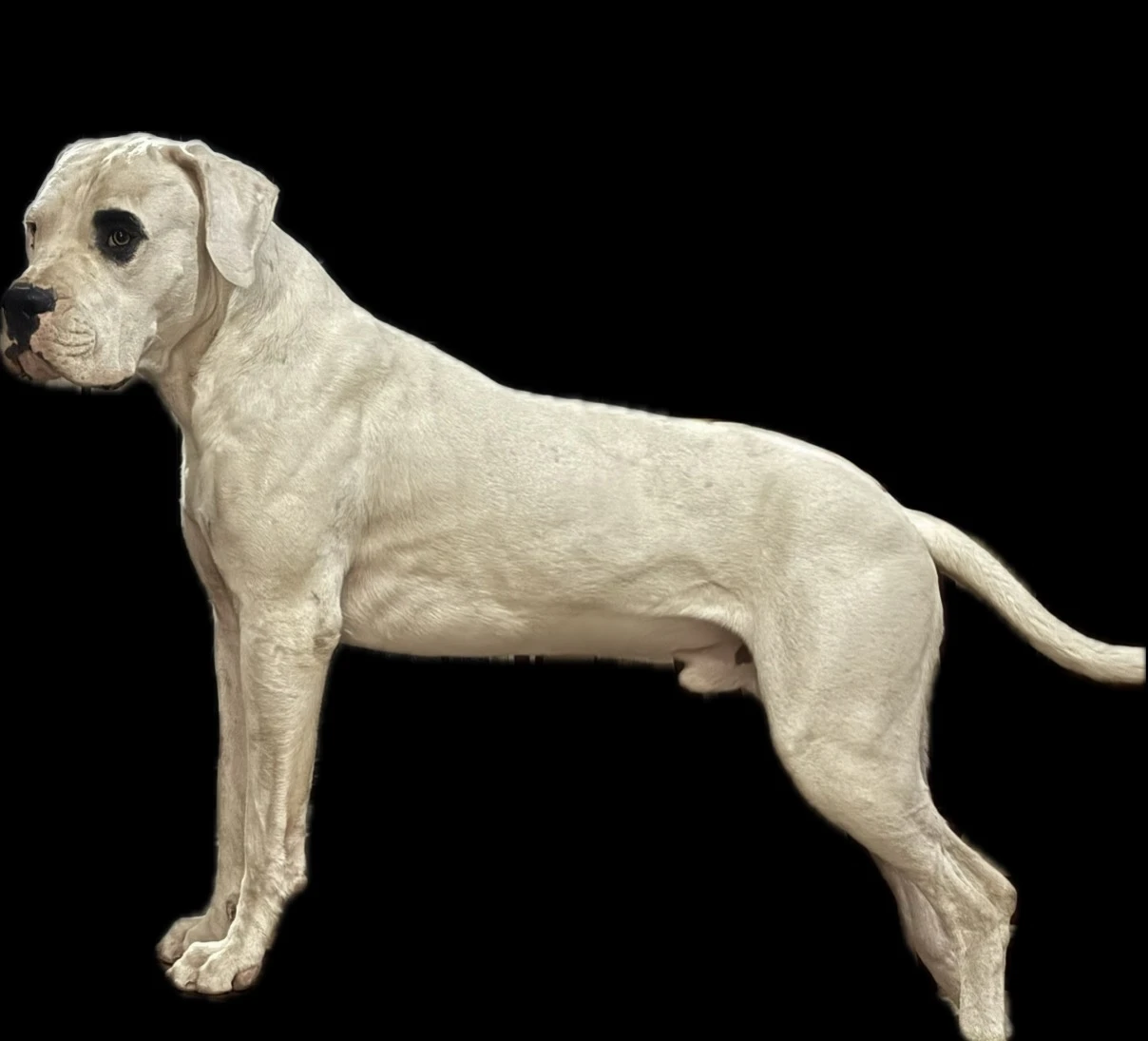
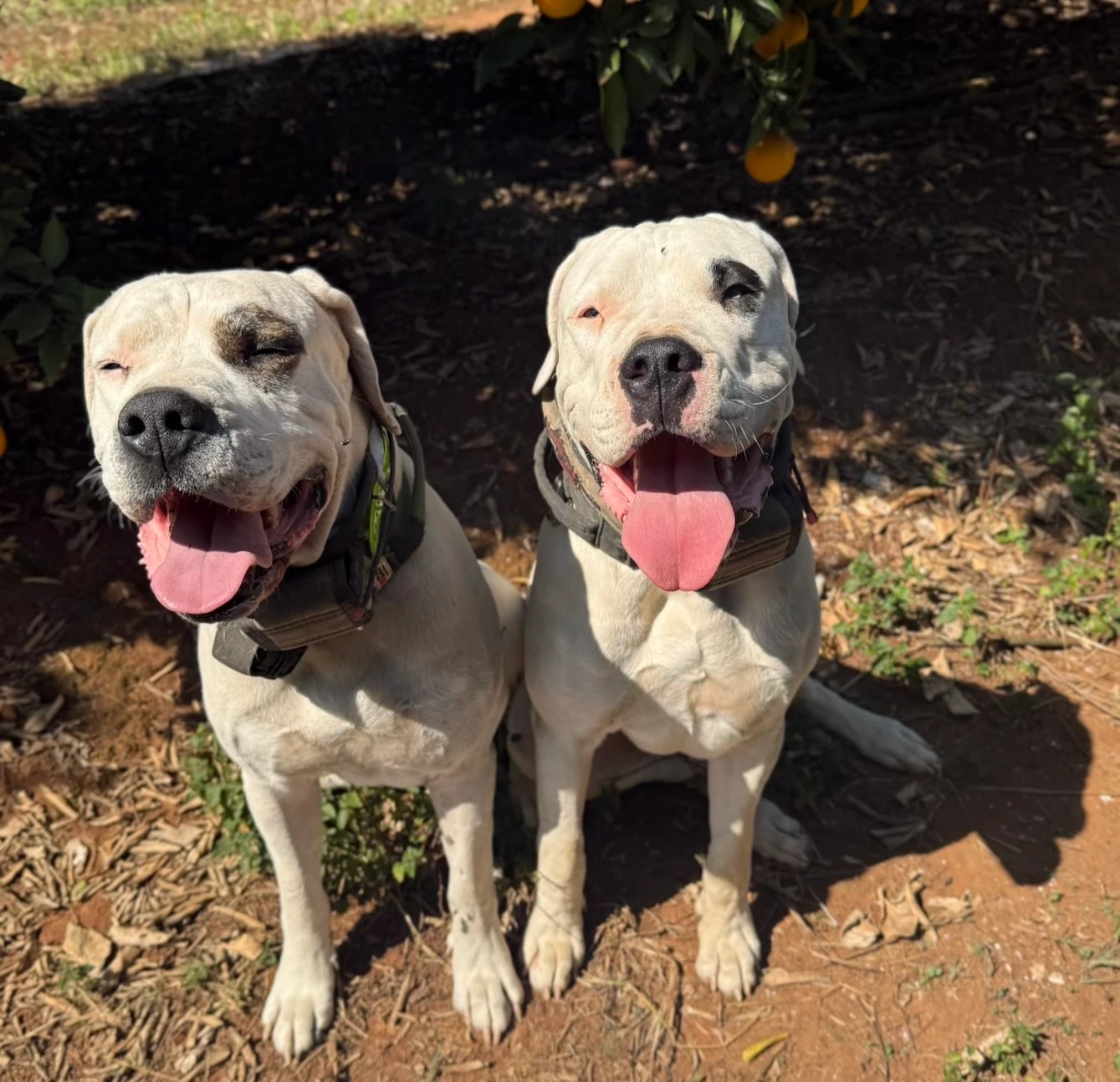
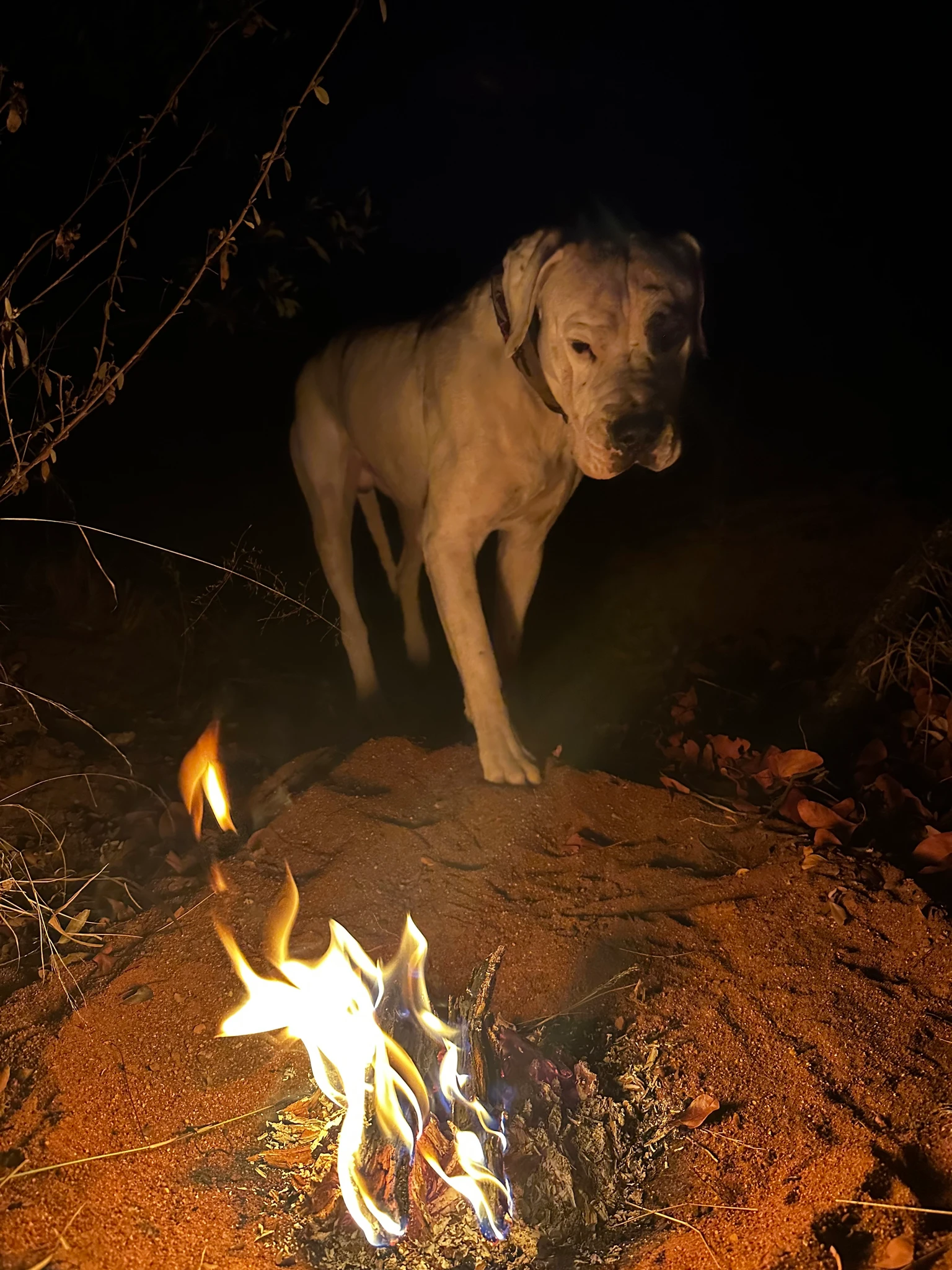
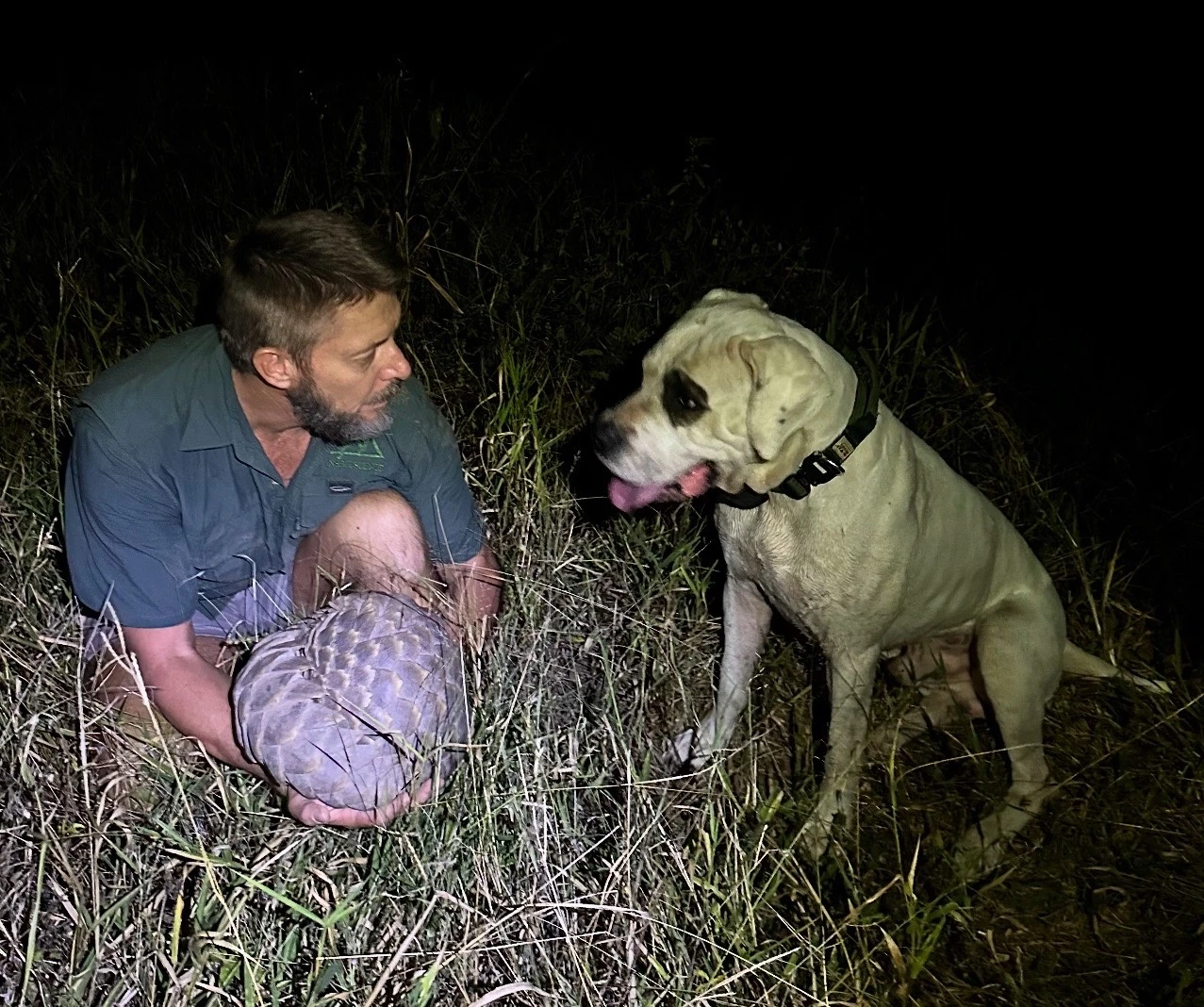
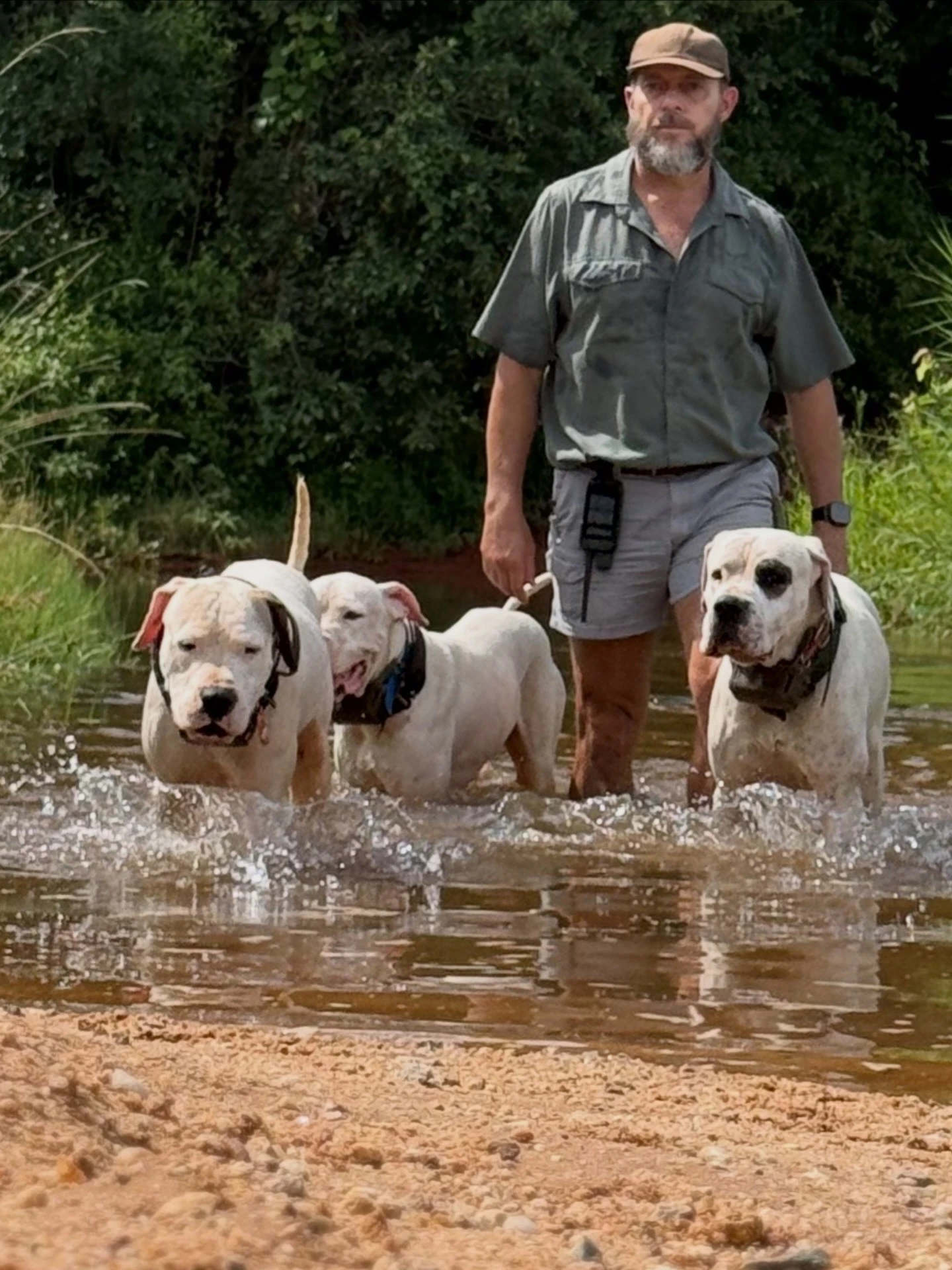
Frequently asked questions
History of the Dogo Argentino
The Argentinian Dogo is a large, white, muscular breed of dog that was developed in Argentina primarily for the purpose of big-game hunting, including wild boar. The breeder, Antonio Nores Martínez, also wanted a dog that would exhibit steadfast bravery and willingly protect its human companion. It was first bred in 1928 from the Cordoba Fighting Dog, along with a wide array of other breeds, including the Great Dane. In 1928, Antonio Nores Martinez, a medical doctor, professor and surgeon, set out to breed a big game huntingdog that was also capable of being a loyal pet and guard dog. Antonio Martinez picked the Cordoba Fighting Dog to be the base for the breed. This breed is extinct today, but it was said that, as a large and ferocious dog, it was a great hunter. Martinez crossed it with the Great Dane, Boxer, Spanish Mastiff, Old English Bulldog, Bull Terrier, Pyrenean Mastiff, English Pointer, Irish Wolfhound and Dogue de Bordeaux.[6] Nores Martinez continued to develop the breed via selective breeding to introduce the desired traits. In 1970, Dr. Raul Zeballos brought the first six specimens of Argentinian Dogo to the United States. Dogos are big-game hunters and are also trained for search and rescue, police assistance, service dogs, guide for the blind, competitive obedience, Schutzhund and military work. The Dogo is an intelligent and courageous dog with a strong, natural instinct to protect its home and family. Dogos are very social dogs and are happiest when included in all family activities. Dogos make a strong distinction between familiar people and strangers, so it is imperative that they be well trained and socialized at an early age.
Original Breed Standard (Argentine Bulldog Standard by Antonio Nore Martinez (Published in 1947)
Skull: Massive, convex in the antero-posterior and transverse direction by reliefs of the muscles and the neck. Face: The same length as the skull, that is to say that the line that joins the two orbital processes of the frontal is equal distance from the occiput and the alveolar edge of the upper jaw. Eyes: Dark, overcast by the eyelids, with black or light edges, the separation between them must be large, lively and intelligent, but with marked hardness at the same time. Maxillae: Well adapted, without prognathism, strong, with well implanted and large teeth. Nose: Strongly pigmented in black, with a slight stop at the tip, very wide nanosal windows. Ears: On the top of the head, erect or semi-straight, triangular in shape, they must always be cut off. Lips: Well rolled up, braces, with black pigmented free edges. The very short lip is required, so that when the dog is prey, it can also breathe through the posterior labial commissure, because the lip if it is a pendulum, although the maxilla is quite long, it comes to act as a valve in the inspiration and closes the commissure of the lips which prevents the animal from taking an extra breath through the mouth during the prey, having to start asphyxiation as in the mastiff. Occiput: It should not be highlighted, because the powerful muscles of the neck erase it completely, being the insertion of the head and neck in the form of an arch. Neck: Thick, arched, slender, with very thick throat skin, making wrinkles like that of the mastiff and not tight like that of the bull-terrier, this elasticity of the neck skin is due to the cellular tissue of this part It is very lax, allowing the skin of the neck to slide on the superficial aponeurosis, so that the fang or the claw of the adversary only hurts the leather and if it were another dog that tries to hold it on the neck, as the skin is elastic and stretches a lot, allows you to press in turn. Chest: Wide and deep, with the feeling of having a large lung, seen from the front, the sternum should slide down the elbows. Back: High, very strong, with large muscular reliefs. Chest: Wide, seen from the side, it exceeds its lower edge elbows. Column: Higher on the back, inclined towards the leg in a gentle slope. In adult animals, when the muscular development of the back and kidney is good, seen in profile, they look like armchairs and have a medium channel along the spine, given by the relief of the spinal muscles. Hands: Straight, well plumb, with short fingers and well joined. Kidney: Erased by the muscles of the back. Legs: Of very muscular thighs, with short garrón and fingers tightly closed, without aberrant finger. Tail: Long, raised in an arc, with a wide curvature upwards during combat, they keep it up in a continuous lateral movement, as when they celebrate the master. The length should try to shorten to improve the harmony of the set, so you should give preferences to those who have the tail that does not reach the garrón. Mantle: White in its entirety, only some dark or black spot on the eyes or head can be tolerated in front of the ears. Any spot in another place of the body should be disqualified as an atavistic character, whites with very pigmented skin of black, should be considered as unfit specimens for breeding, by the recessive character that they show and that can become predominant in children if they mate with another specimen that has such a defect. Reason for disqualification: Streaky eyes, deafness, spots on the body, long hair, white nose, prognathism, pendulum lip and all body disproportion. Note: note the reader, that Antonio does not mention the lack of premolars anywhere. In the following years they continue with the intense work of the brothers, one in their promotion and others helping Antonio in his work, trying to stabilize the race according to his objective.
Breed Standard (Standard presented in Argentine Kineological Federation (A modified copy of the one written by Antonio Nores Martínez in 1953) F.C.I. N ° 292-- July 31, 1973
SKULL: Massive, convex in the anteroposterior and transverse direction by the reliefs of the chewing muscles and the neck. FACE: The same length as the skull, that is, the line that joins the two processes Orbitals of the frontal be equal distance from the occiput and alveolar edge of the maxilla. AGUSTIN AGREGA: we have separated skull and face, but both together constitute the "Head" of the Bulldog, which is typical and, as explained in the course of this work, belongs to the "mesocephalic" type and must have a convex-concave profile, that is to say, the convex skull by the relief of the insertion of the chewing muscles, classic of the skull of the prey dog, "chewing type" and the slightly concave face or snout upwards, typical of a large dog Smell, that is, it has a chewing skull and an olfactory face as soon as there is a functional interaction: the high vent. Zygomatic arches far apart from the skull, with a large temporal fossa, for the comfortable insertion of the temporal muscle, one of the main chewers. EYES: Dark, "or hazelnut color". Overcast by eyelids with black borders or Of course, the separation between them must be large, lively and intelligent, but with marked hardness at the same time. (Clear eyes or red eyelids, score. Color inequality - stubs - is a reason for disqualification). MAXILAR: Well adapted, without prognathism, strong, with well implanted teeth and big. (The number of molars is not important, the most important being the homogeneity of the dental arches, the lack of caries, that there is no prog- natismo, neither superior nor inferior, and especially that the four fangs, large and clean, cross perfectly in the bite when making prey). NOSE: Strongly pigmented black, with a slight stop at the tip; windows nasal wide. (The white or very spotted white nose, subtract score. Split nose or cleft lip, is cause for disqualification). EARS: On the top of the head, erect or semi-straight, triangular in shape, they should Always be cut. (The jury must not judge a Bulldog with long ears, so he must remove it from the ring. In the female, the ears may be cut a little longer - as in the Great Dane -. The male is preferable with slightly shorter ears The Argentine Bulldog is a dog of prey, that is, a fighting dog and in it the long ears offer an easy and very painful prey.In addition, aesthetic reasons make it necessary to cut ears. LIPS: Well rolled up, braces, free edges, pigmented black. It requires a short lip (eliminates “good”), so that when the dog is prey, it can also breathe through the posterior labial commissure, because if the lip is pendulum, although the maxilla is quite long, it comes to act as a valve in the inspiration and closes the corner of the lips, which prevents the animal from taking an extra breath through the corners of the mouth, during the prey, having to go asphyxiation, (eliminates as the mastiff and adds: as happens in the races of hanging lips) . OCCIPUT: It should not be highlighted, because the powerful muscles of the neck erase it completely, being the insertion of the head and neck in the form of an arc. He adds: (It is confused with the curved line of the convexity of the skull). NECK: Thick, arched, slender, with very thick throat skin, making Wrinkles like those of (Remove Mastiff) and add Mastin, Dogue de Bordeaux or Bulldog), and not as tight as in the Bullterrier. This elasticity of the neck skin is due to the fact that the cellular tissue of this part is very lax, allowing the skin of the neck slipping on the superficial aponeurosis, so that the fang or claw of the adversary only hurts the leather, (it eliminates and if it were another dog the one that tries to hold it of the neck and adds: and when it is a cougar, for example, the one in - try to hold it by the neck, as the skin is elastic and stretches a lot, it allows you to prey in turn). CHEST: Broad, deep, with the feeling of having a great lung. Seen from front, the sternum must pass below the elbows. (Since the Argentine Bulldog is a working and fighting dog, it is obvious to highlight the importance of a deep and broad chest, because of the importance of breathing in the dog). BACK: High. Very strong. Of large muscular reliefs. CHEST: Large; Seen from the side, its lower edge overflows at the elbows. COLUMN: Higher on the back, (Antonio writes: and leaning toward the leg in soft pen- tooth, which is not the same interpretation that Augustine gives) inclined in the slope in gentle slope). In adult animals, when the muscular development of the back and kidney is good, seen in profile, they look like armchairs and have a medium channel along the spine, given by the relief of the spinal muscles). HANDS: Straight, well plumb, with short fingers and well joined. (The length of the two should keep proportion with the hand and have very fleshy pads and thick skin and very rough to the touch, with calluses that allow you to run a lot through rough and stony ground, without hurting yourself). KIDNEY: Erased by the muscles of the back. LEGS: Of very muscular thighs, with short garrón and fingers tightly closed, without aberrant (With good angulation, always remembering that they are the pillars pro Speed and support braces in hand-to-hand fighting, so it will never be too much to insist on the strength of the thigh muscles. The aberrant finger, so easy to make disappear in the first months, subtracts score as a recessive character towards the Doge of the Pyrenees, but it is not a reason for disqualification). TAIL: Long (adds: and thick), but without exceeding the hocks, naturally worn- fallen mind During the fight he keeps her up, in a continuous lateral movement, as when he celebrates his master. (It should be borne in mind that the queue is a great help, both in the change of direction to the race, in that it acts as a helm, in compensatory action, as in the fight, where it acts as a support or support point, collaborating in the work of the back rooms). WEIGHT: From 40 to 45 kilos (these points Antonio does not include them in the standard ones but in different considerations). HEIGHT: (at this point the same happens as in the previous one). From 60 to 65 centimeters (both in height and weight, the judge must be in- flexible, since the Bulldog is a fighting dog, among the big game breeds, the decrease in size reduces its effectiveness. Any adult bulldog, male or female, that is less than 60 centimeters tall, should be disqualified, with the highest elevation being preferred among several good specimens. The creator of the breed has taught that the Dogo Argentino is a norm type and within it a macro. That is to say, that there must be a harmony in the proportion, that under the functional point of view, it is euritmia or normal organic correlation that is translated by a greater capacity of force, reason why the one of greater size and weight must be looked for, but without reaching gigantism). MANTLE: Completely white. Any stain of any color must be disqualified as atavistic character. (Whites with very pigmented black skin, should be considered as unfit specimens for breeding, because of the recessive character they show and that can become predominant in children if they mate with other specimens that have this defect in potential. The small spots on the head are not grounds for disqualification, but between two similar examples, it should be preferred to the one that is completely white. Any stain on the body should be grounds for disqualification. At this point Agustín eliminates something very important, because Antonio says very clearly: Only a few dark or black spots on the eyes or on the head can be tolerated in front of the ears. DISQUALIFICATION REASONS: Streaky eyes, deafness, spots on the body, long hair, white nose or very stained in white, prognathism (be it lower or higher), very pendulous lip (Agustin introduces a very pendulum, subtracting the importance given by Antonio), bonded head (due to his bad experience), long ears (not trimmed), size smaller than 60 centimeters, more than one spot on the face and all physical disproportion. The aberrant finger subtracts points, without reaching disqualification (experience that Antonio did not have because he did not have the miscegenation’s made by Agustín).
Breed Standard for Dogo Argentino (South Africa -KUSA)
SOUTH AFRICA (According to KUSA - Kennel Union of Southern Africa) Most recent changes to this Standard have an effective date of 01/01/2020 for KUSA registered dogos WORKING GROUP: Dogo Argentino FCI Standard No 292: DOGO ARGENTINO FCI Classification: Group 2: Pinscher and Schnauzer, Molossoid type dogs, and Swiss Mountain and Cattle dogs Section 2.1. Molossian breeds, Dogue type Without Working Trial ORIGIN Argentina. UTILISATION Big-game hunting dog. BRIEF HISTORICAL SUMMARY This breed is native to the province of Cordoba, in the Mediterranean region of Argentina. Its creator was Dr. Antonio Nores Martinez, a prominent and active surgeon (1907 – 1956). His work was based upon the methodical crossbreeding of the “Old Fighting Dog of Cordoba”, a breed of great power and strength, which was crossed, at first, with the English Bulldog, Great Dane, Pyrenean Mastiff, Bull Terrier, Boxer, Pointer, Dogue de Bordeaux, and Irish Wolfhound. He selected completely white dogs for breeding, not undershot, with heavy heads, and long muzzle. After a thorough and minute character study and selection, through different generations, his aim was accomplished in forming different families [ed. lines], always using, as a start, the Old Fighting Dog of Cordoba. By 1947, the breed had been established, and its genotype and phenotype were stabilised. The same year, the breed standard was presented at the Hunter’s Club in the City of Buenos Aires. Its strength, tenacity, sense of smell, and bravery made it the best in the pack of dogs to hunt wild boars, peccaries, pumas, and other predators of agriculture and livestock that inhabit the vast and diverse regions of Argentina. This is the traditional activity for which Antonio Nores created this breed. In 1964, it was recognised as a breed by the FCA (Federación Cinologica Argentina) and the Sociedad Rural Argentina, which opened their stud book to initiate registry. In 1973 the breed was accepted by the FCI. This was possible thanks to the great passion and unique work and effort of Dr. Agustín Nores Martínez, brother of the founder of the breed, who achieved this recognition, not only because of his individual actions, but also from the institutional action of the FCA and the Dogo Argentino Club, and Dr. Antonio Nores Martinez. GENERAL APPEARANCE It is an athletic dog, mesomorphic [ed. , normal type, of harmonious proportions. With powerful muscles and agile, his appearance gives the impression of power, energy and strength, in contrast to his expression of friendship and gentleness. All-white; can have a single dark spot on the skull. IMPORTANT PROPORTIONS Mesocephalic [ed. , the muzzle should be the same length as the skull. The height at the withers should be slightly greater than the height at the croup. Depth of chest should represent at least 50% of the height at the withers. The length of the body should exceed the height at the withers by only 10% (maximum). BEHAVIOUR / TEMPERAMENT It should be silent, never barking on the trail, with a keen nose and excellent flair, vent, agile, strong, robust and especially brave. Should never be aggressive toward humans, a feature that will be severely observed. It must give you love without condition or reservation. HEAD Of mesocephalic type, it looks strong and powerful. The cranio-facial axes [ed. head planes] are convergent. Cranial Region: Skull: Compact, convex seen in profile and from the front, due to the outline of the well-developed masticatory [ed. chewing] and neck muscles. Occiput: Occipital protuberance not visible due to powerful muscles of neck that hide it completely. Stop: Defined, but should not be deep or have sharp (abrupt) angles. Facial Region: As long as the skull, the line joining the two frontal orbital muscles is equidistant from the occiput and the mandibular joint of the upper jaws [ed. the muzzle is as long as the skull; the measurement from the occiput to the joint of the lower jaw (just below the zygomatic arch), is equal to the distance between the eyes.] Nose: Strongly black-pigmented. Nostrils well-opened. Muzzle: Same length as the skull, with concave topline. Lips: Tight, free edges, black-pigmented, never pendulous. Cheeks: Large, marked, covered by strong skin, without folds. Well-developed masseter muscles. Jaws and teeth: Jaws correctly positioned, well-developed, and strong, Not under- or overshot; with healthy teeth, large, and with normal implant. Full dentition is recommended. Scissor bite, pincer bite is accepted. Eyes: Medium size, almond-shaped, dark- or hazel-coloured, lids preferably with black pigmentation. Sub-frontal position [ed. facing forward and slightly oblique ], wide apart, lively, and intelligent expression but at the same time remarkably firm. Ears: Set high, lateral, well apart due to the width of the skull. Functionally, they should be cropped and erect, in triangular shape, and with a length that should not exceed 50% of the front edge of the auricle of the natural ear. Without being cropped, they are of medium length, broad, thick, flat, and rounded at the tip. Covered with smooth hair that is slightly shorter than on the rest of the body; they can have small spots, not to be penalised. In natural position they hang down covering the back of the cheeks. When the dog is alert, they may be carried semi-erect. [*refer note below] NECK Thick, arched, the skin of the throat is very thick forming smooth folds without forming dewlap. The elasticity of the skin is due to the cellular tissue being very relaxed. BODY Rectangular. The length of the body (measured from the point of shoulder to point of buttock) may exceed the height at the withers by only 10%. Topline: Higher at the withers, sloping gently to the croup. The adults have a median furrow along the spine caused by the prominence of the spinal muscles. Seen from the side, should not have any depression. Withers: Strong, well-defined and high. Back: Very strong, with muscles well-defined. Loin: Short, broad, very muscular. Croup: Broad and strong. Moderately inclined. Chest: Broad and deep. Seen from the front and profile, the sternum must reach down to the level of the elbows, thereby giving maximum breathing capacity. The thorax is long with ribs moderately curved. Underline and belly: Rising slightly on the bottom line of the chest, never tucked-up, strong, and with good muscle tension. TAIL Long, not to exceed the hock joint, thick, medium set. At rest, it hangs down naturally; in action, it is raised in an arc with an ample curve. LIMBS Forequarters: General appearance: Legs straight, vertical, with short, tight toes. Shoulder: Laid-back, with great muscular development, without exaggerations. Upper arm: Same length as the shoulder; well-inclined. Elbow: Sturdy, covered with a thicker and more elastic skin, without folds or wrinkles. Naturally placed against the chest wall. Forearm: As long as the upper arm, perpendicular to the ground, straight with strong bone and muscles. Carpus (wrist): Broad and in line with the forearm, without bony prominences or skin folds. Metacarpus (pastern): Rather flat, well-boned; seen from the side, slightly inclined, without exaggeration. Hindquarters: General appearance: Well-muscled, with short pasterns and tight-fitting toes, without dewclaws. Moderate angulation. Upper thigh: Well-proportioned, with visible and well-developed muscles. Stifle (knee): Well-angulated. Lower thigh: Slightly shorter than upper thigh, strong, and muscular. Hock joint: The tarsus-metatarsus section is short, strong, and firm, ensuring powerful propulsion of the hind limb. Tarsus is robust, with the point of the hock very prominent. Hocks are strong, almost cylindrical and vertical, without dewclaws. FEET Forefeet: With short and tight-fitting toes. With strong, thick, and resistant pads, preferably black-pigmented. Hind feet: Similar to forefeet, although somewhat smaller and slightly longer, maintaining the same characteristics. GAIT / MOVEMENT Agile and firm; with noticeable modification when showing interest in something, changing into an alert attitude and responding with quick reflexes, typical for this breed. Calm when walking; trot is extended, with good front suspension and powerful rear propulsion. At gallop, the dog shows all of its energy, fully displaying its power. The movement is agile and firm when walking, trotting or galloping. Should be harmonious and balanced, showing a solid body construction. Ambling (pacing) is not accepted and is considered a serious fault. SKIN Homogeneous [ed.consistent / uniform], thick, but elastic. The semi-loose subcutaneous tissue [ed. the layer of tissue under the skin] is elastic, without wrinkling, except on the throat, where the subcutaneous tissue is more relaxed. Lips and eyelids pigmented in black are preferred. Black-pigmented skin is not penalised. COAT Uniform, short, smooth, with an average length of 1.5cm – 2cm. Density and thickness vary according to climate. COLOUR • Entirely white. * Only one black or dark-coloured patch on the skull, which can also be located on one ear or around one eye. The size of the spot must be in proportion to the size of the head, not exceeding 10% of the latter. * Comparing two dogs of equal quality, the whiter specimen should be preferred. SIZE Height at withers: Males: 60cm – 68cm (approx. 231⁄2” – 27”); ideal height: 64cm – 65cm (approx. 25” – 251⁄2”) Females: 60cm – 65cm (approx. 231⁄2” – 251⁄2”); ideal height: 62cm – 64cm (approx. 241⁄2” – 25”) Weight: Males: 40kg – 45kg Females: 40kg – 43kg N.B. Male animals should have two apparently normal testicles fully descended into the scrotum. Only functionally and clinically healthy dogs, with breed typical conformation should be used for breeding. Note: Cropped ears – KUSA Schedule 2 Regulation 7: “Any dog with cropped ears born within the jurisdiction of the KUSA, imported into it and cropped within it, shall not be registered or recorded by the Kennel Union, and if any such dog is registered or recorded in contravention of this Regulation, upon discovery, its registration or recording shall be cancelled. 7.1. Any dog with ears cropped before importation into the KUSA area of jurisdiction is not eligible for competition at any Kennel Union event.” FAULTS Any departure from the foregoing points should be considered a fault and the seriousness with which the fault should be regarded should be in exact proportion to its degree and its effect upon the health and welfare of the dog, and on the dog’s ability to perform its traditional work. Severe faults: Lack of bone and muscle development (weakness). Nose partially pigmented in adult specimens. Small, weak, or unhealthy teeth. Entropion, ectropion. Eyes of round appearance due to the shape of the eyelids, bulging eyes, light or yellow. Barrel chest. Keel chest. Flat ribs. Lack of depth of chest, which does not reach the level of the elbows. Lack of angulation on the limbs. Croup higher than withers. Ambling movement (pacing). Males and females whose weight does not comply with the official valid standard and not in proportion to the size of the dog. Disqualifying faults: Aggressive or overly shy. Any dog clearly showing physical or behavioural abnormalities. Over or undershot mouth. Deafness. Lack of type. Long hair. Total lack of pigmentation of the nose in dogs aged 2 years or more. Brown nose. Pendulous lips. Spots on the hair of the body. More than one spot on the head. Height above or below the limits established in the standard. Eyes of different colour or blue. Lack of sexual dimorphism.
IS THE DOGO THE BREED I’M LOOKING FOR?
There is NO short answer. READ ALL OF THIS, then see summary at end. The Argentinian Dogo is a large, white, muscular breed of dog that was developed in Argentina primarily for the purpose of big-game hunting, including wild boar. Males weigh 40-45kgs, 60-68cm heigh at the shoulder Females weigh 38-43kgs, 60-65cm heigh at the shoulder Dogos were bred as big-game hunters in Argentinia. In modern days they still hunt in some areas and with a few breeders, but they are also trained for search and rescue, police assistance, service dogs, guide for the blind, competitive obedience, Schutzhund and military work. At ShaTranj our Dogos hunt, track, does anti poaching, find wounded, snared or darted game, help with snare detection, reacts to farm attacks and crime scenes and assist with Search & Rescue operations. The Dogo is an intelligent and courageous dog with a strong, natural instinct to protect its home and family. Dogos are very social dogs and are happiest when included in all family activities. Dogos make a strong distinction between familiar people and strangers, so it is imperative that they be well trained and socialized at an early age. The breeder, Antonio Nores Martínez, also wanted a dog that would exhibit steadfast bravery and willingly protect its human companion. It was first bred in 1928 from the Cordoba Fighting Dog, along with a wide array of other breeds, including the Great Dane. In 1928, Antonio Nores Martinez, a medical doctor, professor and surgeon, set out to breed a big game huntingdog that was also capable of being a loyal pet and guard dog. Antonio Martinez picked the Cordoba Fighting Dog to be the base for the breed. This breed is extinct today, but it was said that, as a large and ferocious dog, it was a great hunter. Martinez crossed it with the Great Dane, Boxer, Spanish Mastiff, Old English Bulldog, Bull Terrier, Pyrenean Mastiff, English Pointer, Irish Wolfhound and Dogue de Bordeaux.[6] Nores Martinez continued to develop the breed via selective breeding to introduce the desired traits. In 1970, Dr. Raul Zeballos brought the first six specimens of Argentinian Dogo to the United States. Summary: - the Dogo is probably not the best choice for 1.) the 1st time dog owner, 2.) the person with zero experience of power breeds or workings breeds - if you “think” it would be nice to have one…pass them by until you’ve physically seen and handled them. Then reevaluate your decision. - if you have no space and no time to exercise, or at least spend quality time with them…pass them by. - if all the above qualifies you NOT to have a Dogo, but you have a burning passion and a desire to learn and develop…go for it. - in our selection for new owners, the macho type, wanting a Dogo for the image, are rarely successful. By all means, be macho, but don’t use the Dogo to try and get it. - otherwise, if you know, you know…and we will do everything we can to match you up with a pup that can enrich your life. You can be macho with him/her or simply loving, you can hunt or simply play flirtpole in the backyard, you can track for hours through the harshest terrain in Africa or you can walk the pavement around the block. JUST DON’T BE AN ASSHOLE WITH YOUR DOGO !! They WILL be as GREAT or as TERRIBLE as you make them. Please feel free to open direct discussion if you need more information, advice or experience stories ! +27 82 309 1651 johan@shatranj.co.za
How much is a puppy and what's included?
Our pups are all equal in quality when they leave our yard. Price differences are solely based on “Pick of the Litter” and registration type (full with breeding rights or limited). For the African market(South Africa & neighboring countries) unregistered, microchipped pups are available. Registration means KUSA (FCI) limited registration, microchipping, age-appropriate vaccinations and deworming and a vet health certificate if required. Full registration includes all above, as well as full breeding rights.
How does the waitlist and deposit work?
Once an application has been successfull, an applicant gets placed on the waiting list, according to their particular choice. Choice may be a pup from a specific mother and father, a specific colouring (like a pirate) or male/female. Waiting period may vary due to these choices, either waiting for a specific mating, or a specific colour pattern to show up. Successful applicants may choose to pay a depisito up front, securing their spot, or they may opt to wait until a litter is borne before deciding to place a deposito. Once a litter is borne, first come, first serve and all deposits paid need to be paid fully in order to reserve a pup. Preference of pup may be indicated at around seven weeks of age. Deposits are transferable to a future litter if the timing isn't right.
Do you ship puppies?
ShaTranj is not a shipping agent. Transport can be arranged anywhere in South Africa at the buyers cost. Shipment of pups can also be arranged(all paperwork included) anywhere in the world where Dogo Argentinos can be legally imported. This will be handled on individual basis to cover all neccassary paperwork, quarantine regulations, veterinary permits etc. Within a 300km radius of ShaTranj premises, it is possible to arrange personal delivery.
What health testing do the parents have?
Every breeding dog is cleared for hips and elbows (OFA), heart, and eyes (CERF), plus a full breed-specific DNA panel.
What if we can't keep the dog someday?
Our contract requires that we always get first right of return. We will take any dog we've bred back at any point in its life, no questions asked — they never end up in a shelter.
What happens when a ShaTranj Dogo gets to old to breed or work ?
All our retired animals remain part of the family. They have been loyal to us as long as they could…we owe them the same. Both dogs and horses remains on the farm, part of the daily routine for as much as they feel themselves up to. Breeding Dogos, injured Dogos…any Dogo that became part of the family, will NEVER be sold off in their old age (or any other age) to become part of a life where strange people try milking the last from them.
We'd love to hear from you
Share your adventures and experiences with Dogos...it helps us all learn from each other and grow as custodians of the awesome breed we love ! We answer every message personally. You are also welcome to post to our Facebook page "Shatranj Dogo Argentinos Southern Africa".
Any questions ?
Any questions on the Dogo Argentino, our Dogos, how to proceed or any related content that hasn’t been covered here, or that was not clear - please contact us !
QUESTIONSReady to find your Dogo Argentino partner ?
Our litters fill quickly. Start your application today and we'll be in touch within 48 hours.
Start Your Application